


Highlights
February 2026
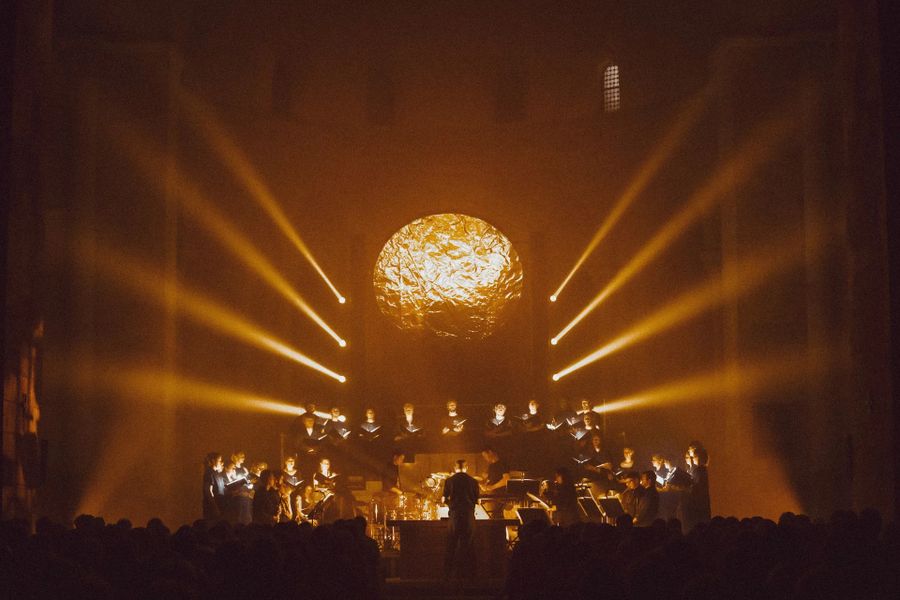
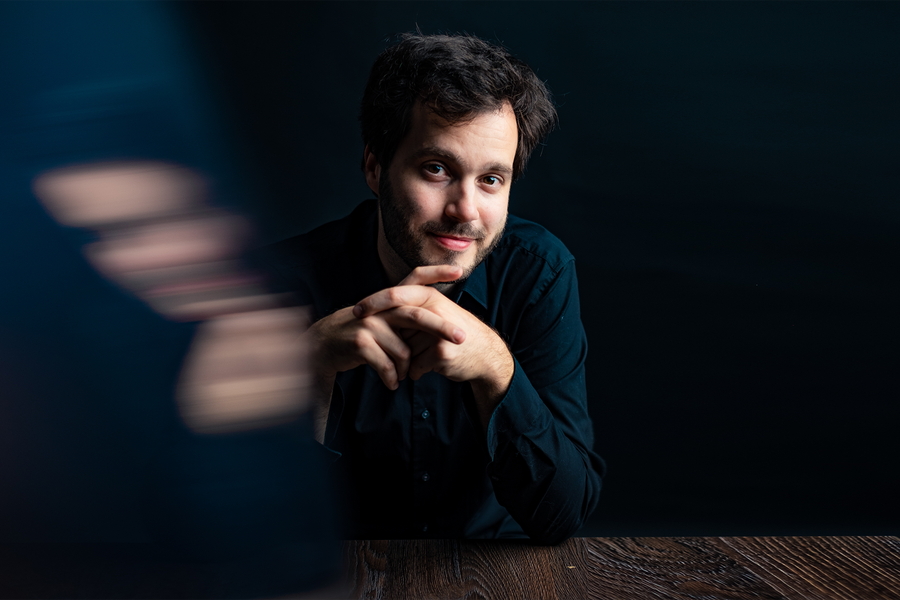
The month of February is full of musical highlights! We have selected special concerts that showcase the best in different genres.
Agenda
-
A Family Affair
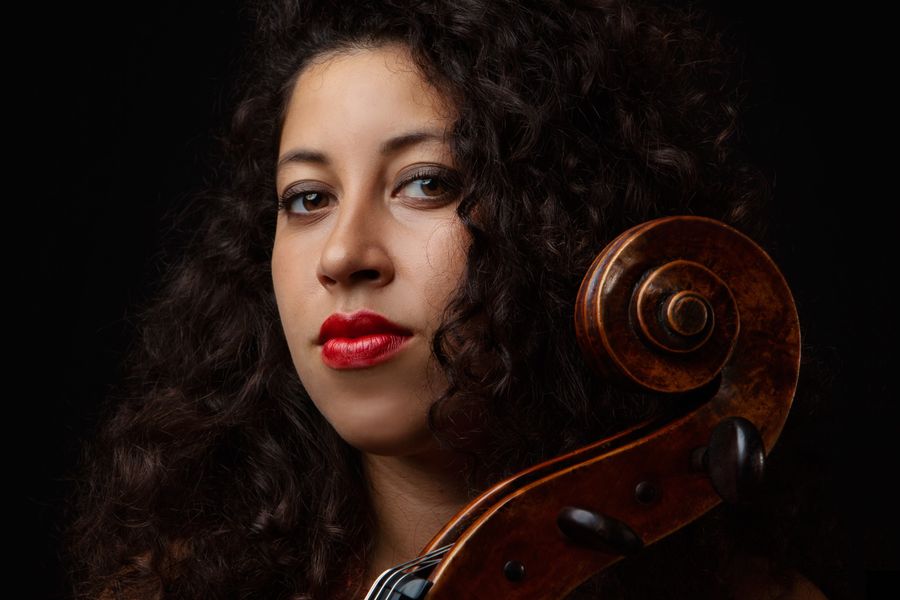
Ella van Poucke + Nicolas van PouckeTwo talented family members play romantic musicMendelssohn, Brahms, Messiaen, Prokofiev
Sat 28 Feb 2026** Due to an injury, cellist Sheku Kanneh-Mason has unfortunately had to cancel the concert originally scheduled for this evening with his sister Isata Kanneh-Mason. Muziekgebouw and Cello Biennal are grateful that Ella and Nicolas van Poucke, also a brother-and-sister duo, were willing to to step in as replacements. The programme is changed because of this.
Ella and Nicolas van Poucke can rightly be called a Dutch star duo. Ella is among the very top of her generation and is internationally acclaimed for her musical integrity, intensity and flawless instrumental command. Nicolas is a much sought‑after soloist, performing in major European concert halls such as the Concertgebouw, the Berlin Philharmonie and London’s Royal Festival Hall. Their performances are praised for their natural ensemble playing, warm tonal palette and deep musical communication.
Their shared affinity with the Romantic repertoire is evident in Mendelssohn’s Variations and Brahms’s Cello Sonata. Prokofiev’s Cello Sonata (1949) brings a modern dimension of lyricism and dramatic expression, while in Louange à l’éternité de Jésus, the fifth movement of Messiaen’s Quatuor pour la fin du temps, time seems to stand still in an almost otherworldly dialogue.
Programme booklet (Dutch)
Program
Felix Mendelssohn Variations for cello and piano
Johannes Brahms Cello Sonata No. 1 in E minor
Olivier Messiaen Louange à l'éternité de Jésus
Sergei Prokofiev Cello Sonata in CCredits
Ella van Poucke cello
Nicolas van Poucke piano -
Kurtág's Kafka-Fragmente
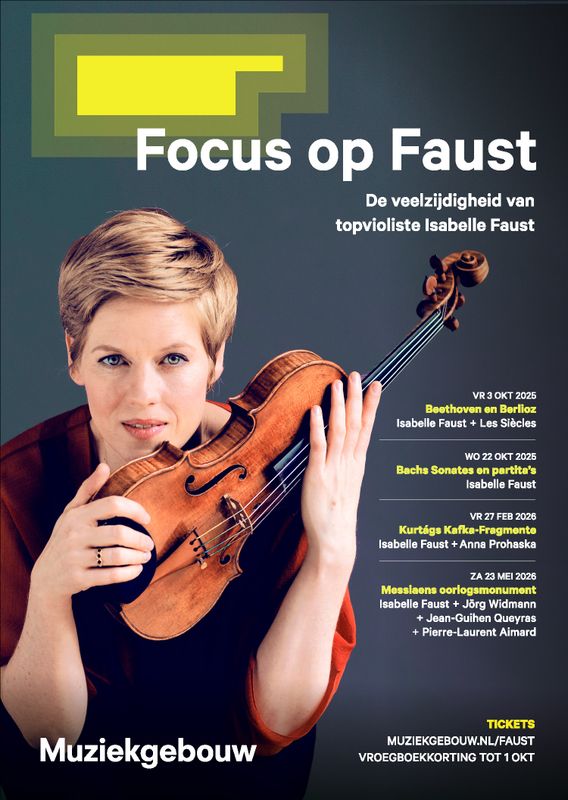
Isabelle Faust + Anna ProhaskaExtraordinary variety and emotional depthKurtág
Fri 27 Feb 2026‘An hour-long work of extraordinary variety and emotional depth.’ This is how The Guardian described György Kurtág’s Kafka-Fragmente after the release of the acclaimed recording by soprano Anna Prohaska and violinist Isabelle Faust. This live performance of the cycle by these two leading musicians is an unparalleled journey, filled with breathtaking moments. Seldom does one witness such vulnerability on stage.
In 1986, Kurtág completed his longest composition yet, Kafka-Fragmente. Inspired by the ideas of psychologist Marianne Stein, he spent a year setting short and long fragments from Franz Kafka’s diaries to music, in his own unique way. With just one voice and one violin, he conjures a complete world of acrobatic virtuosity, theatrical flair, and music that resonates long after the performance.
Echoes of Nothing
From 19:45 to 20:00 in the Entreehal, prior to the concert in the Grote Zaal, the three curators of Echoes of Nothing will give a short performance. Reflecting on the work by Kafka, Jaime Peña Martínez and Yumi Augustine were inspired to write pieces on cicadas, insects who go through a fascinating metamorphosis within their lives. After these original pieces, they finish with celebrating Kurtag's roots by playing music originating in Hungary.
Programme:
Jaime Peña Martínez Emergence
Yumi Augustine Cicada shell
Béla Bartók 'White Lily' from 'Three Hungarian Folk songs from Csik' (arr. Jaime Peña Martínez)Credits:
Federico Martinez Moreno percussion
Jaime Peña Martínez clarinet
Yumi Augustine guitar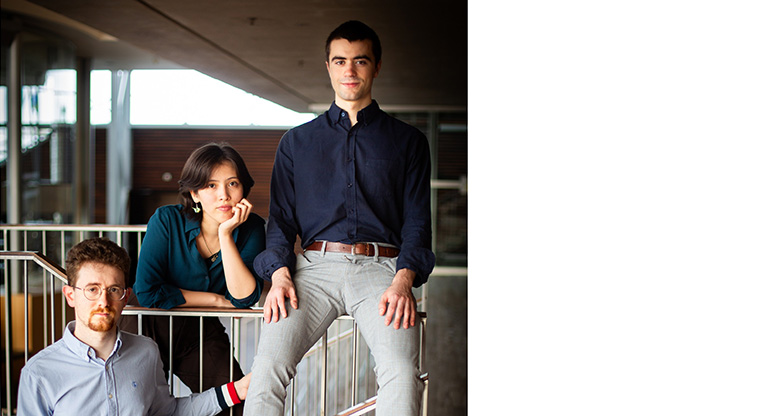
Learn more about Echoes of NothingProgramme booklet (Dutch)
Program
György Kurtág Kafka-Fragmente
Credits
Isabelle Faust violin
Anna Prohaska soprano -
Voci Bianche
PRJCT Amsterdam, Maarten Engeltjes, Valer Sabadus + Frans van DeursenThe triumph and tragedy of the castratiHändel, Porpora, Gluck, Vivaldi
Fri 20 Feb 2026Countertenor Maarten Engeltjes and his baroque ensemble PRJCT Amsterdam delve into the world of the castrati. Frans van Deursen tells the story of castrati such as Farinelli and Senesino. Valer Sabadus, today’s countertenor sensation, joins Engeltjes to perform both timeless classics and lesser known pieces. A semi-staged performance about the triumph and tragedy of the castrati.
For nearly three centuries, the opera stage was dominated by castrati. This high male voice, a result of castration, was especially prevalent in southern European countries. This was largely due to the fact that women were forbidden to perform in public by Catholic powers during the early Baroque period. The practice of castration led to great dramas and equally great triumphs. And to masterful arias such as Handel’s Lascia ch’io pianga from Rinaldo.
Daan Esch, who was originally scheduled to perform, has had to cancel due to to health reasons. He will be replaced by Frans van Deursen.
Porgramme booklet (Dutch)
Program
Nicola Porpora Or la nube (Artaserse) / Alto Giove (Polifemo)
Georg Frideric Handel Bel contento (Flavio, Re de’ Longobardi) / Stille amare (Tolomeo, Re d’Egitto) / De Torrente (Dixit Dominus) / Spero per voi (Ariodante) / Lascia ch’io pianga (Rinaldo)
Christoph Willibald Gluck Che farò (Orfeo ed Euridice)
Antonio Vivaldi Armatae face (Juditha Triumphans)Credits
PRJCT Amsterdam
Maarten Engeltjes countertenor
Valer Sabadus countertenor
Frans van Deursen reciter -
Orlando, a melancholic portrait
La Tempête + lecture by Saskia TörnqvistThe adventurous versatility of Orlando di LassoOrlando di Lasso
Wed 18 Feb 2026The French ensemble La Tempête, debuts at the Muziekgebouw with a concert dedicated to one composer: Orlando di Lasso. The versatility of this 16th-century composer and the many adventures he experienced inspired artistic director Simon-Pierre Bestion to a remarkable sound monograph. Virginia Woolf’s novel Orlando also plays an important role in it. With effortless ease, the ensemble combines electric guitars with centuries-old cornets, imparting the music with maximum richness.
La Tempête isn’t keen on conventions. Artistic director Simon-Pierre Bestion readily incorporates modern instruments like the saxophone and electric guitar into his arrangements of Renaissance works. Staging and design are the finishing touches. While everything is new, it all serves the music, restoring its old glory.
La Caisse des Dépôts is the main sponsor of La Tempête.
It also receives the support of the French Ministry of Culture, the Société Générale Foundation, the Auvergne Rhône-Alpes region, the Centre National de la Musique (CNM), the Orange Foundation, as well as the Adami, Spedidam and SACEM.
7 p.m. / Early Music lecture (Dutch spoken) by Saskia Törnqvist
The many faces of Orlando di Lasso
The Fleming Orlando di Lasso held positions in Mantua, Milan, and Rome, travelled through France and England, and eventually settled in Bavaria amidst the vibrant court life of Albrecht V. “I do not want to leave my house, my garden, and the other good things in Munich,” wrote Di Lasso, but this outward contentment belied an inner battle with ‘melancholia hypochondriaca’. This lecture explores, using musical examples, the composer’s contrasting sides: from deeply religious to scabrous, always returning to melancholy, the state of mind cultivated at many European courts.Programme booklet (Dutch)
Program
19.00 / Early Music lecture (Dutch spoken)
The many faces of Orlando di Lasso by Saskia Törnqvist20.15 / Main programme
Orlando di Lasso Orlando, A Melancholic PortraitCredits
La Tempête
Simon-Pierre Bestion musical direction, arrangements, adaptation
Anne-Lise Heimburger comedian, adaptationCecilia Galli costumes
Sebian Falk light design
Alice Le Moigne sound management
Florian Delattre stage management -
Etudes then and now
Antonii BaryshevskyiVirtuoso, captivating, subdued and poignant concert piecesDebussy, Ligeti, Kerkelov, Liszt, Chopin, Shalygin
Sat 7 Feb 2026Although originally intended as mere technical exercises, Antonii Baryshevskyi shows the breathtaking beauty of etudes. Chopin, Liszt and Debussy reimagined etudes as virtuoso concert pieces, and Baryshevskyi combines them with contemporary pieces by Svyatoslav Lunyov and Maxim Shalygin. And then it becomes clear that an etude is more than just a technical exercise; it can also be subdued and vulnerable.
The raw simplicity of Shalygin’s Fetus Etudes, at times poignant and painful, goes straight to the heart. Sharing their Ukrainian heritage and a passion for music, Shalygin and Baryshevskyi bring out the best in each other. Since fleeing his homeland, Baryshevskyi has become an ambassador for Ukrainian music on the world stage.
'Baryshevskyi has something special' (Martha Argerich)
'Unequivocally impressive' (Gramophone Magazine)
Programme booklet (Dutch)Program
Claude Debussy Etude No. 1 ‘Pour les cinq doigts (d'après Monsieur Czerny)’ / Etude No. 11 ‘Pour les arpèges composés’
György Ligeti Arc-en-ciel / Étude Fem
Peter Kerkelov Evening from Anthems of day and night
Svyatoslav Lunyov Adieu from Etudes
Franz Liszt Etude de Concert No. 1 ‘Waldesrauschen’ / Chasse-neige from Études d'exécution transcendante
Frédéric Chopin Étude Op. 10 No. 3 in E / Étude Op. 10 No. 12 in C minor
Maxim Shalygin Fetus Etudes (Angel, Au vent sur la pointe des pieds, TO ALL ALIVE, TO ALL IN LOVE, TO ALL RESURRECTED)Credits
Antonii Baryshevskyi piano
-
Rabe
Aynur + North Netherlands Symphony OrchestraSoulful voice surrounded by musical grandeur
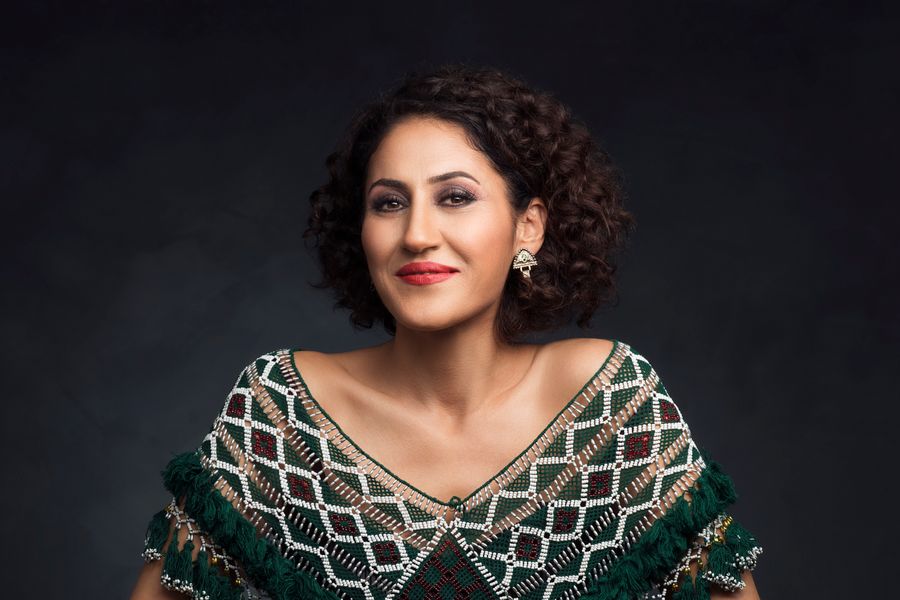
Thu 5 Feb 2026In Aynur’s work, every song tells a story, with the celebrated singer drawing from her Kurdish background. Her songs are also moving sound poems, with which she evokes a world of emotions. Together with her own band and the North Netherlands Symphony Orchestra, Aynur presents an anthology of her oeuvre, which ranges from intimate to danceable and in which strings feature prominently.
Aynur has proven to be a sensation in the Netherlands as well, with her past performances at the Muziekgebouw selling out rapidly. Her international status is solidified by the renowned cellist Yo-Yo Ma, who has worked with her and describes her voice as ‘deeply soulful, heart-rending, and unforgettable’. On her most recent album, Rabe, she also blends Kurdish poetry with pop, jazz and classical music.
Program
Music from the album Rabe
Credits
Noord Nederlands Orkest
Aynur voice
Wolf Kershek conductor
Franz Von Chossy piano
Patrick Goraguer percussion
Caner Malkoc klarinet
Chris Jennings bass, double bass
TBD tembur, cura