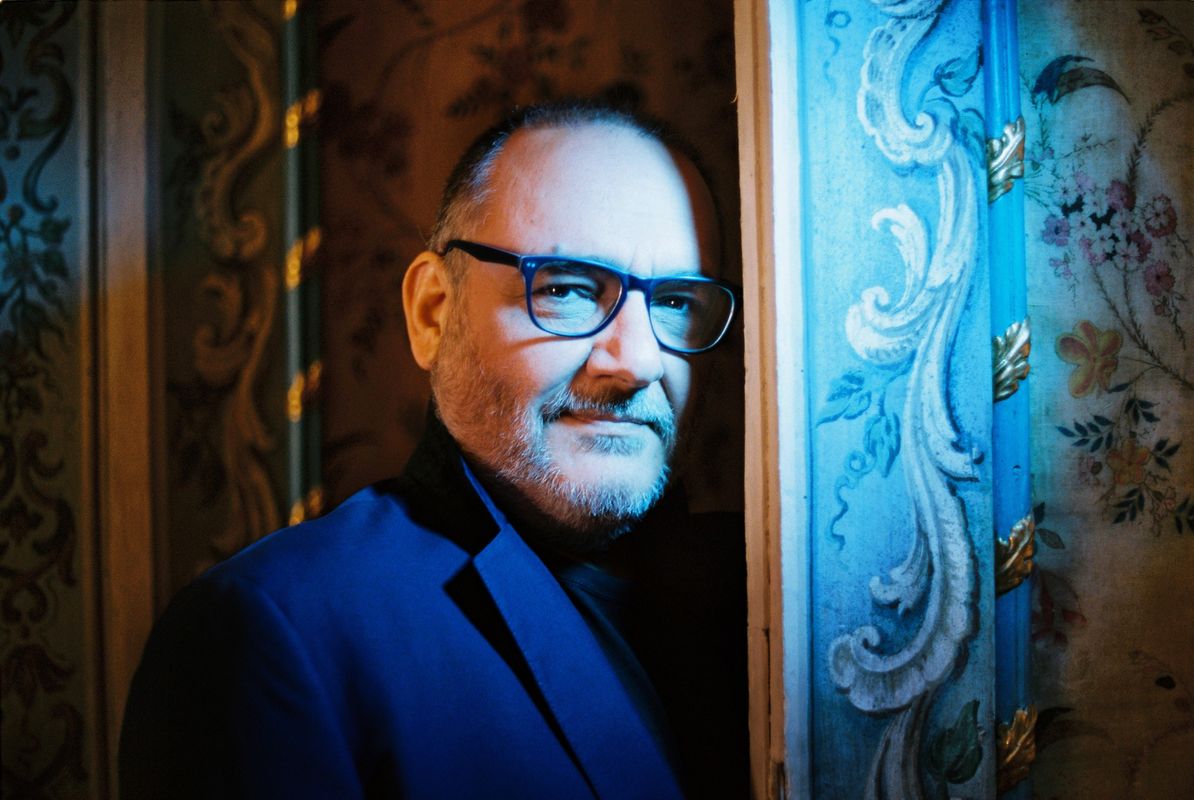

Rinaldo Alesandrini © Emilie Moysson / Naïve

Monteverdi's madrigals

Concerto Italiano + lecture Saskia Törnqvist
Wed 2 Dec 2026 20:15 - 22:00
Wed 2 Dec 2026
20:15 - 22:00
  • Wed 2 Dec 2026
    20:15 - 22:00
    Grote Zaal

Program

19.00 uur / Grote Zaal / Early Music Lecture (Dutch spoken)
Monteverdi’s poignant dissonances by Saskia Törnqvist

20.15 uur / Grote Zaal / Main program
Claudio Monteverdi Madrigals Book III 

Credits

Rinaldo Alessandrini conductor 
 
Concerto Italiano 
Monica Piccinini soprano 
Sonia Tedla soprano 
Maria Chiara Gallo mezzo-soprano 
Andres Montilla alto 
Raffaele Giordani tenor 
Gabriele Lombardi bass 
‘Songs’ on the border between Renaissance and Baroque 

Anyone not moved by Monteverdi’s madrigals must surely have a heart of stone. Especially when Concerto Italiano pours its heart into the notes, the music touches you to the core. This time, the Italian ensemble takes on the third book, a series of madrigals balancing on the cusp of the Renaissance and the Baroque. Concerto Italiano captures every nuance. As The Guardian wrote about Concerto Italiano’s performance of Monteverdi: ‘You won’t hear it sung any better anywhere today’. 

Claudio Monteverdi is the towering figure who led Italy through the transition from the Renaissance to the Baroque. Over time, his complex polyphonic style gave way to a more transparent style, with the lyrics becoming more intelligible. He transformed the madrigals into ‘songs’ with a distinct melody and accompaniment, and laid the foundation for Italian opera. Monteverdi’s many madrigals serve as an immersive roadmap through the development of this pioneering composer.

7 p.m. / Early Music lecture (Dutch spoken) by Saskia Törnqvist
Monteverdi’s poignant dissonances
Monteverdi was a Janus-faced composer. He knew perfectly well how to write a polyphonic mass according to the old rules of Palestrina, yet he was also a figure of controversy, accused of ‘crudeness and licentiousness’ for the modernism of his madrigals. In these works, he allowed himself to be guided by the content, drama and rhythm of secular poetry, which gave him carte blanche to toss the old rules of composition aside in favour of bold musical experimentation. In this lecture, some of his madrigals will be examined and dissected, focusing on the interplay between lyrics and music. 

Put me on the waiting list

Wish list

Added:

To wishlist