


Pianist with a vision
A conversation with Pierre-Laurent Aimard, our focus artist for 2026/27
April 2026
By Frederike Berntsen
If any pianist has a close connection with Muziekgebouw aan ’t IJ, it is Pierre-Laurent Aimard. His frequent performances here have created unforgettable highlights, including during the Ligeti Festival and Kurtág Festival. ‘Not just spending a night in the city, but truly diving into something; that’s enriching.’
The musical career of Pierre-Laurent Aimard, next season’s ‘Artist in Focus’ at the Muziekgebouw, is characterised by a total dedication to the contemporary repertoire. The Frenchman, a former student of Olivier Messiaen, is a champion of the great composers of our time, who often write pieces for him. Occasionally, he ventures into the standard piano repertoire. And even then, the scene remains familiar: at the keys, we see a performer who sinks his teeth into the material – sensitive, yet driven and uncompromising.
‘It is a godsend,’ Aimard emphasizes, ‘to be able to collaborate with like-minded souls. The Muziekgebouw team, who are so meticulous in executing a plan and with whom I can consult in such depth, consists of people with a vision who speak your language. I have nothing but praise for them. Their belief in my choices inspires confidence and ensures continuity in my work.’
_web_1.jpg)
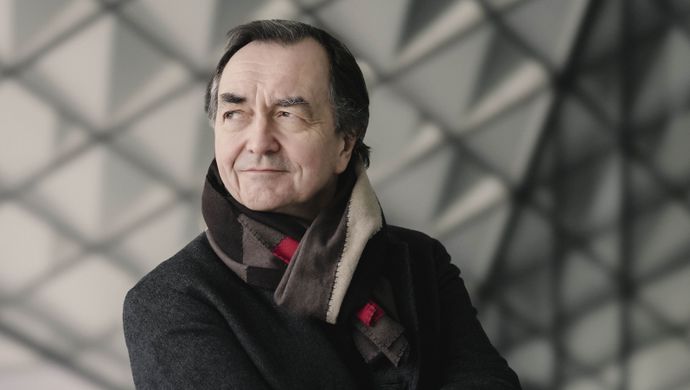
Pierre-Laurent Aimard (photo Marco Borggreve)
Modest
Aimard knows what he wants, driven by a love and admiration for music and its creators, yet he is the very picture of modesty. You will never catch him clinging to a fixed opinion. As a little boy, attending operas and concert halls with his parents, he experienced everything from the standard repertoire to experimental works. And even then, he knew: all of this matters, not just one thing. And more importantly: it belongs to everyone. Distinguishing between different types of audiences? He’d rather not. Since the start of his career, he wanted to embrace centuries of music, and not just perform as a soloist, but also be part of an ensemble and teach. ‘The world is constantly changing; you have to keep readjusting your own position. I try to stay informed, to make a contribution and, above all, not to become an institution myself. It’s quite a challenge not to be a prisoner of the human comedy.’
Does Aimard feel a sense of responsibility toward the next generation of musicians? ‘Certainly, though not by leaving behind a dogmatic legacy. I think that, in a world in which technology plays an ever-greater role, it is vital to pass on our rich musical heritage in a personal way. I hope to inspire musicians and listeners alike through the craftsmanship embedded in all that magnificent music.’
Carter and Beethoven
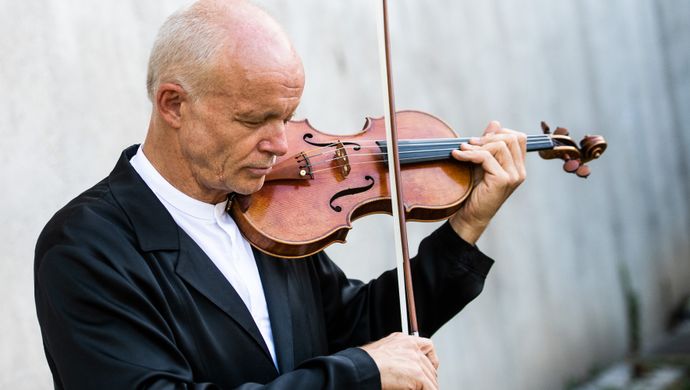
One of the composers Aimard mentions is Elliott Carter, who died in 2012 at the age of 103. Carter was a mentor to Aimard, who began immersing himself in Carter’s music in the late seventies and built up a close relationship with the American composer. ‘He wrote intelligent music, full of imagination. Carter was a polyphonic innovator who placed his own era at the heart of his work. A great thinker, this man.’ He will perform Carter’s Duo for Violin and Piano, with Thomas Zehetmair, and the Double Concerto for Harpsichord and Piano. In the latter work, Aimard’s former pupil Benjamin Kobler will take his place behind the harpsichord.
During another evening at the Muziekgebouw, Pierre-Laurent Aimard will perform a recital featuring Beethoven’s Hammerklavier Sonata and Ives’s Concord Sonata – works of two titans. ‘The piano recital is a fascinating format; isn't it marvellous that, to this day, listeners still love coming together for such a live experience?’ But a recital isn’t suitable for every piece, Aimard believes. In his programming, he seeks the best way to serve the music, and has been experimenting with this his whole life. Messiaen’s Catalogue d’oiseaux was performed outdoors by Aimard, beginning at dawn and continuing throughout the day at various locations in the natural world. A unique experience, and one of the many original ideas that spring from Aimard’s creative mind. ‘The power of the Beethoven-Ives evening,’ he says, ‘lies in the pieces themselves, which push every conceivable pianistic boundary. Beethoven and Ives were visionary philosophers of sound and true avant-garde pioneers.’
_web.jpg)
Pierre-Laurent Aimard in het Muziekgebouw (photo Martina Simkovicova)
Freedom
'I find freedom of thought within a composition deeply appealing, and indeed essential. Take Mozart’s Fantasia No. 3: it is a mini-opera, an intriguing psychological journey with a perfect dramatic structure. Then there is Beethoven’s Fantasia – that word again. Contemporary composers who invite us to find our individual freedom through their work, urging us to form our own thoughts rather than following imposed, existing rules. I really like it when a composer takes you through ten different keys in a short amount of time. Putting a program together isn’t just about entertaining people; the role of culture is crucial when it comes to forming our thoughts and beliefs.’
Typically Pierre-Laurent Aimard: the recently written piano pieces that interest him most bear no resemblance to the ‘piano culture’ he knows so well. He smiles and kisses his fingertips like a chef admiring a perfect dish: ‘The world is in motion; it is creative, it is overwhelming.’
This article is a pre-publication from the Vriendenmagazine DichtbIJ.
Pierre-Laurent Aimard at Muziekgebouw
Schumann’s restless expression
Pierre-Laurent Aimard + Thomas Zehetmair
Carter and more
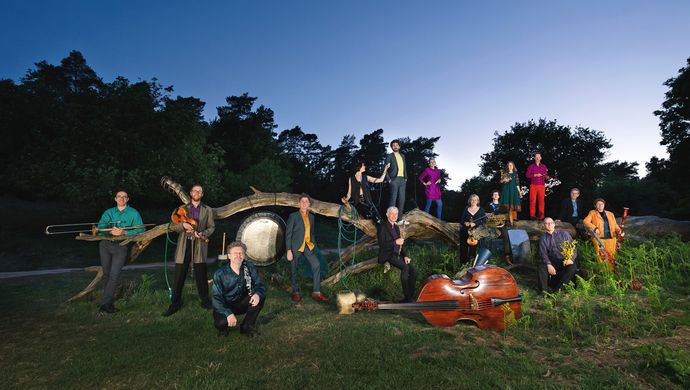
Ensemble Musikfabrik, Pierre-Laurent Aimard + Bas Wiegers