





Minimal Music Festival 2026
Background information
Thu 16 April
16.30 / Public rehearsal
Program
16.30 / Grote Zaal / Public rehearsal of a new percussion concerto by Kate Moore
±17.30 / Entreehal / Post-concert talk with composer Kate Moore, moderated by music journalist Frederike Berntsen
Credits
Het Muziek
Clark Rundell conductor
Claire Edwardes percussion
Background information
Storm Oratory by Kate Moore is a percussion concerto written for the Australian percussionist Claire Edwardes and Het Muziek. Moore found inspiration for the work during the long walking journeys she undertook over several consecutive years. She was regularly caught in storms. “You don’t always see them coming,” she says. “But you can feel how all movement seems to drain out of the atmosphere. Colours shift. The sky turns green and purple. Sometimes a storm is deep blue. Storm Oratory begins in a green stillness, as if everything has sunk into contemplation.”
Those colours play a role in the music. Like Olivier Messiaen, Moore is a synesthete: colours evoke sounds, and sounds evoke colours. “I use colour in my music. I colour this piece as though it were a painting of a storm in which the listener is immersed. The timbral colours of the instruments are my palette. In Storm Oratory, the ensemble becomes a river filled with eddies and rapids, surging forward with an inevitable, shifting intensity. These are the same kinds of movements that unfold in the sky.”
Speed is a key element—also in Claire Edwardes’ role in Storm Oratory. “Claire plays bass drum, large tomtoms, a gong and marimba. All at high velocity. She is a fantastic percussionist. We’ve known each other for a very long time. When I was 15, she premiered my Concerto for Percussion and String Orchestra, which I had written for her. That was the beginning of my career as a composer. It’s an honour to write another percussion concerto for her at this point in my life. And we both have ties to Australia and the Netherlands, where she once won the Tromp Competition. She’s an advocate for my music in both countries.”
Biographies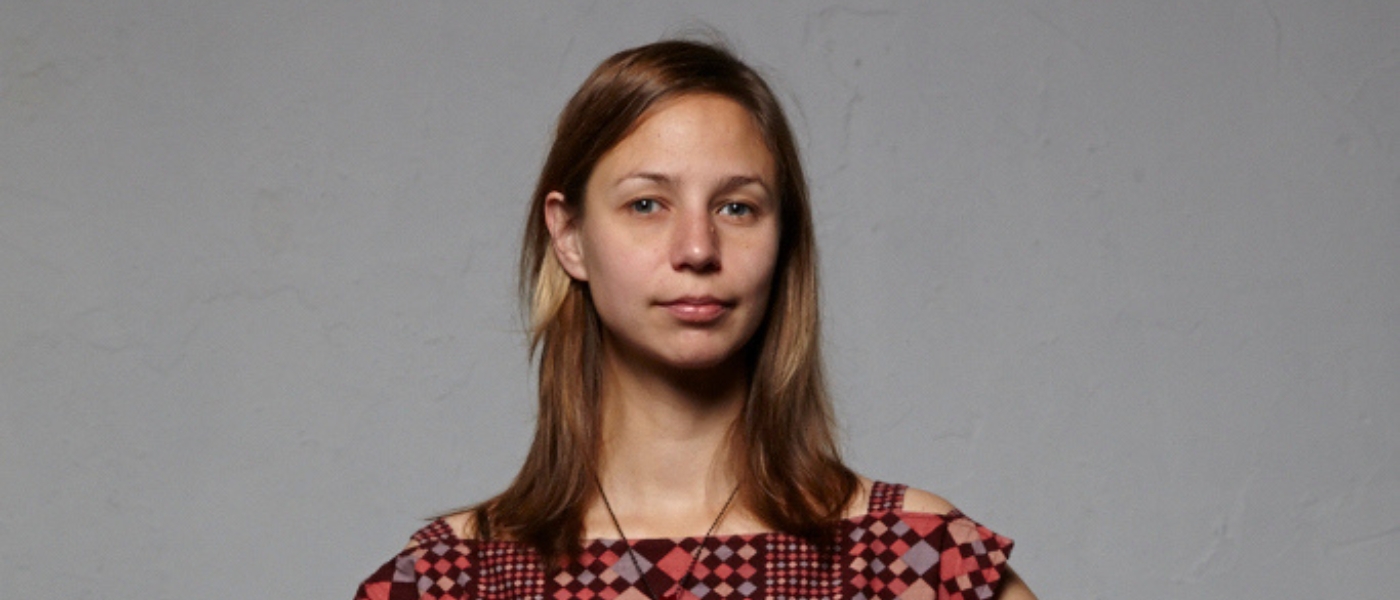
Central themes in the work of Kate Moore (1979) include care for nature, spirituality, and the role of women in music and other fields. She often uses unusual sound sources in her compositions, including ceramic objects she makes herself. Her music has been performed at Carnegie Hall, the Sydney Opera House, the Concertgebouw Amsterdam, and major festivals such as the Holland Festival, November Music, and Dag in de Branding. In 2017 she founded the Herz Ensemble. Moore has received various awards, including the Matthijs Vermeulen Award (2017) and the GieskesStrijbis Podium Prize (2022).
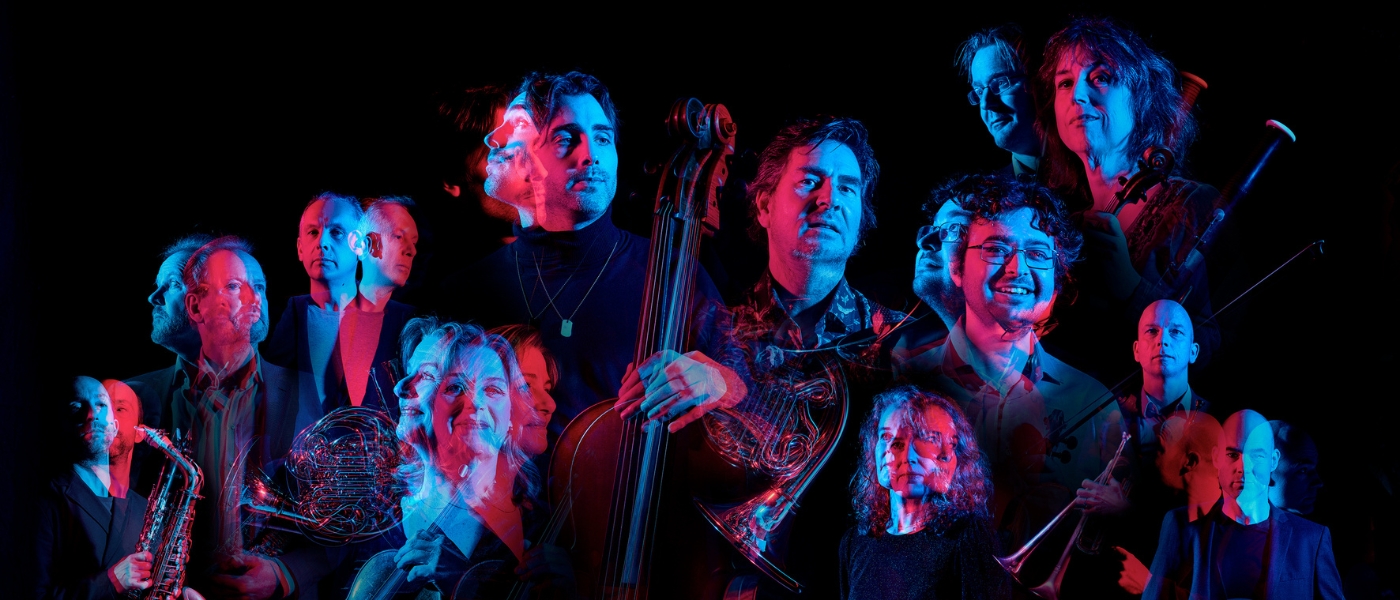 Het Muziek is the leading boundarypushing ensemble for new music. With striking musical projects, unexpected collaborations and an openminded approach, the ensemble helps shape the music of today. Het Muziek performs everywhere—from concert halls and outdoor festivals to theatres; from its home base in Amsterdam to far beyond. Its mission is always to inspire a wide audience and open ears to new sounds. Het Muziek is ensembleinresidence at Muziekgebouw aan ’t IJ.
 Claire Edwardes (1975) is an Australian percussionist and artistic leader, acclaimed as the “sorceress of percussion.” She is the only Australian to have received the APRA Art Music Luminary Award four times. As artistic director of Ensemble Offspring and an international soloist, she is known for her virtuosity, her commitment to new music, and a wideranging repertoire from marimba to electronics. For her contributions to Australian music she received the Medal of the Order of Australia.
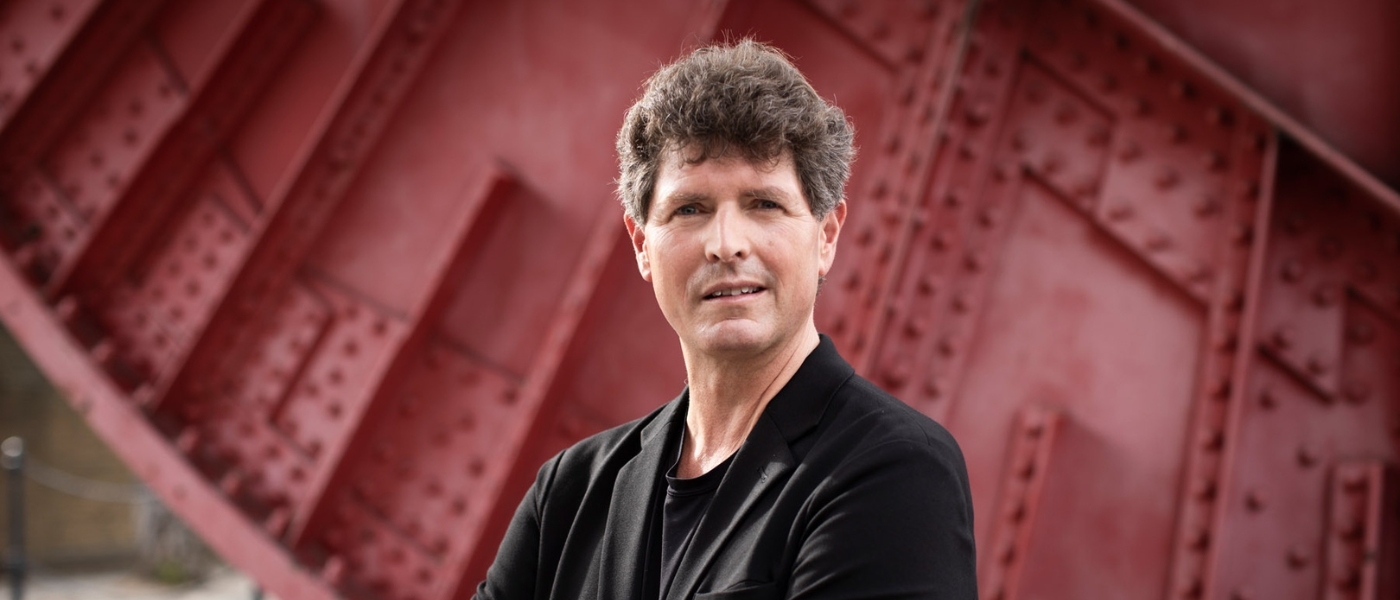 The repertoire of the versatile conductor Clark Rundell ranges from jazz to kora, from tango to European modernism, and from large multidimensional projects to complex ensemble works. Rundell has conducted many world premieres and is a deeply committed interpreter of new music. Works by composers such as Louis Andriessen, Steve Reich, Tansy Davies, Martijn Padding, Joey Roukens, Wayne Shorter, and Julia Wolfe have been performed under his direction.
Text: René van Peer
20.15 / Opening concert
Programma
Ivan Vukosavljević Dead in Love (World premiere)
Kate Moore Percussion Concerto 'Storm Oratory' (World premiere)
Credits
Het Muziek
Clark Rundell conductor
Claire Edwardes percussion
Dead in Love - Background information
Ivan Vukosavljević has a deep interest in Christian mysticism and in music from various traditions. Both lie at the foundation of Dead in Love. The title is a quotation from The Mirror of Simple Souls by the latemedieval French mystic Marguerite Porete. “As was common in the literature of that time, human qualities are presented as characters,” he explains. “In the book, the Soul undertakes a journey from a worldly position in relation to God toward unity with God. Only when the Soul relinquishes all desire and striving does the divine will remain. By the disappearance—death—of selfawareness, the soul can lose itself in the love of God. In the translation into archaic English that I read, the text gained an additional poetic resonance.”
At the same time that Vukosavljević was reading Porete’s work, he was delving more deeply into unusual instruments such as the sarod (an Indian string instrument) and the harpsichord, as well as historical Western tuning systems. “These things naturally came together as I was composing the piece. For some time I’ve been exploring and applying microtones in my music, like those found in Indian music, as well as in tuning systems from the Middle Ages to the Baroque. When instruments are tuned this way, you can create very pure chords, but also sonorities with an outright rough character. And when you let a melody move through those chords, the context keeps shifting.”
Dead in Love consists of nine movements in which different instruments come to the foreground. “It is a devotional work. Often there is a drone as the foundation for the melody, which makes its character even more audible.”
Storm Oratory - Background information
Storm Oratory by Kate Moore is a percussion concerto written for the Australian percussionist Claire Edwardes and Het Muziek. Moore found inspiration for the work during the long walking journeys she undertook over several consecutive years. She was regularly caught in storms. “You don’t always see them coming,” she says. “But you can feel how all movement seems to drain out of the atmosphere. Colours shift. The sky turns green and purple. Sometimes a storm is deep blue. Storm Oratory begins in a green stillness, as if everything has sunk into contemplation.”
Those colours play a role in the music. Like Olivier Messiaen, Moore is a synesthete: colours evoke sounds, and sounds evoke colours. “I use colour in my music. I colour this piece as though it were a painting of a storm in which the listener is immersed. The timbral colours of the instruments are my palette. In Storm Oratory, the ensemble becomes a river filled with eddies and rapids, surging forward with an inevitable, shifting intensity. These are the same kinds of movements that unfold in the sky.”
Speed is a key element—also in Claire Edwardes’ role in Storm Oratory. “Claire plays bass drum, large tomtoms, a gong and marimba. All at high velocity. She is a fantastic percussionist. We’ve known each other for a very long time. When I was 15, she premiered my Concerto for Percussion and String Orchestra, which I had written for her. That was the beginning of my career as a composer. It’s an honour to write another percussion concerto for her at this point in my life. And we both have ties to Australia and the Netherlands, where she once won the Tromp Competition. She’s an advocate for my music in both countries.”
Biographies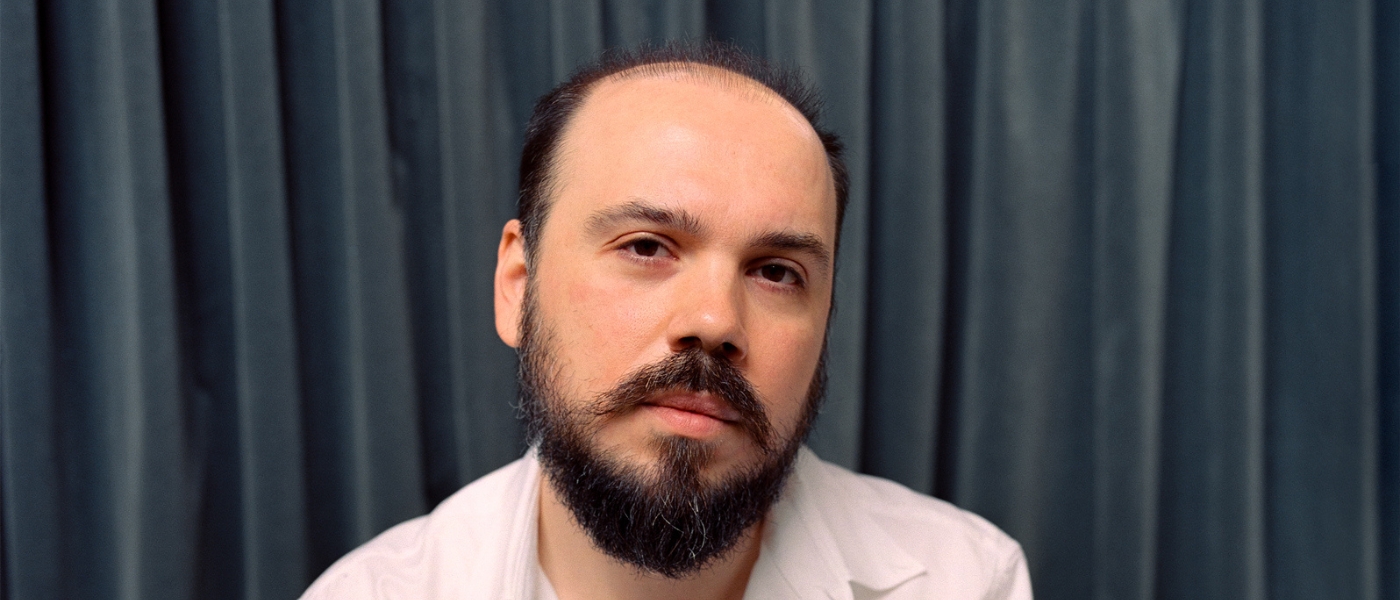 Ivan Vukosavljević (1986) is a Serbian composer based in The Hague. His work brings together diverse sound worlds—from electric guitars, noise and electronics to Western and nonWestern instruments and organ. His music is heard at festivals such as Rewire, Le Guess Who?, Gaudeamus Muziekweek and Lucerne Festival. He studied composition in Belgrade and at the Royal Conservatoire in The Hague.
Central themes in the work of Kate Moore (1979) include care for nature, spirituality, and the role of women in music and other fields. She often uses unusual sound sources in her compositions, including ceramic objects she makes herself. Her music has been performed at Carnegie Hall, the Sydney Opera House, the Concertgebouw Amsterdam, and major festivals such as the Holland Festival, November Music, and Dag in de Branding. In 2017 she founded the Herz Ensemble. Moore has received various awards, including the Matthijs Vermeulen Award (2017) and the GieskesStrijbis Podium Prize (2022). Her composition Space Junk premiered at the Minimal Music Festival in 2019.
Het Muziek is the leading boundarypushing ensemble for new music. With striking musical projects, unexpected collaborations and an openminded approach, the ensemble helps shape the music of today. Het Muziek performs everywhere—from concert halls and outdoor festivals to theatres; from its home base in Amsterdam to far beyond. Its mission is always to inspire a wide audience and open ears to new sounds. Het Muziek is ensembleinresidence at Muziekgebouw aan ’t IJ.
Claire Edwardes (1975) is an Australian percussionist and artistic leader, acclaimed as the “sorceress of percussion.” She is the only Australian to have received the APRA Art Music Luminary Award four times. As artistic director of Ensemble Offspring and an international soloist, she is known for her virtuosity, her commitment to new music, and a wideranging repertoire from marimba to electronics. For her contributions to Australian music she received the Medal of the Order of Australia.
The repertoire of the versatile conductor Clark Rundell ranges from jazz to kora, from tango to European modernism, and from large multidimensional projects to complex ensemble works. Rundell has conducted many world premieres and is a deeply committed interpreter of new music. Works by composers such as Louis Andriessen, Steve Reich, Tansy Davies, Martijn Padding, Joey Roukens, Wayne Shorter, and Julia Wolfe have been performed under his direction.
Tekst: René van Peer
20:30 / KKAARREENNIINNAA
Program
FUJI||||||||||||TA
Charlemagne Palestine, Oren Ambarchi, Daniel O’Sullivan reimagine KKAARREENNIINNAA
Credits
FUJI|||||||||||TA organ, electronics
Charlemagne Palestine voice, electronics
Oren Ambarchi guitar, electronics
Daniel O'Sullivan voice, viola, electronics
KKAARREENNIINNAA - Background information
KKAARREENNIINNAA is een twee uur durend werk van de componist Charlemagne Palestine, die in New York bekend werd vanwege muziekperformances, die veel van zijn uithoudingsvermogen vergden. Hij nam het in één keer op in 1997 en bracht het uit op een dubbel-cd. Op dit album speelt Palestine harmonium en zingt hij falset. Bijna 30 jaar later brengt altviolist Daniel O’Sullivan gitarist Oren Ambarchi en componist Charlemagne Palestine bijeen voor een ‘herinterpretatie’ van KKAARREENNIINNAA.
Volgens O’Sullivan, die jaren geleden al eens met Palestine optrad, speelt dit werk een belangrijke rol in het repertoire van de componist. ‘Het is als het ware een samengebalde versie van zijn muziek. Hij grijpt terug op de zang van de cantors in de synagoge die hij hoorde toen hij jong was. Daarnaast heeft hij de Indiase zang van Pran Nath er een plek in gegeven. Pran Nath had een grote invloed op componisten uit de minimal music, zoals La Monte Young, Terry Riley, Catherine Christer Hennix, en Charlemagne Palestine zelf. Het werk is genoemd naar een hond die hij en zijn toenmalige vriendin indertijd hadden, een zwarte Labrador die Karenina heette.’
Het werk was toe aan een herwaardering, vond O’Sullivan. Hij wilde gewoon een nieuwe uitvoering horen. ‘Toen ik dat aan hem voorstelde, ging het er mij niet om dat ik mee zou spelen. Maar hij vond dat vanzelfsprekend. Ik wilde de kern uit de muziek nemen, het water en licht geven en zien hoe het zou uitgroeien. We wilden de muziek niet noot voor noot naspelen, maar ons eigen maken waar het om gaat, en vandaaruit een interpretatie spelen. Die duurt doorgaans zo’n vijftig minuten. Bij de uitvoering spelen we de oorspronkelijke opname af op drie cassettedecks. Ik heb Oren erbij gevraagd omdat hij Charlemagne goed kent. Charlemagne heeft een geweldige uitstraling bij deze optredens, als een indrukwekkend standbeeld op het podium. Hij is het stuk.’
KKAARREENNIINNAA - Biographies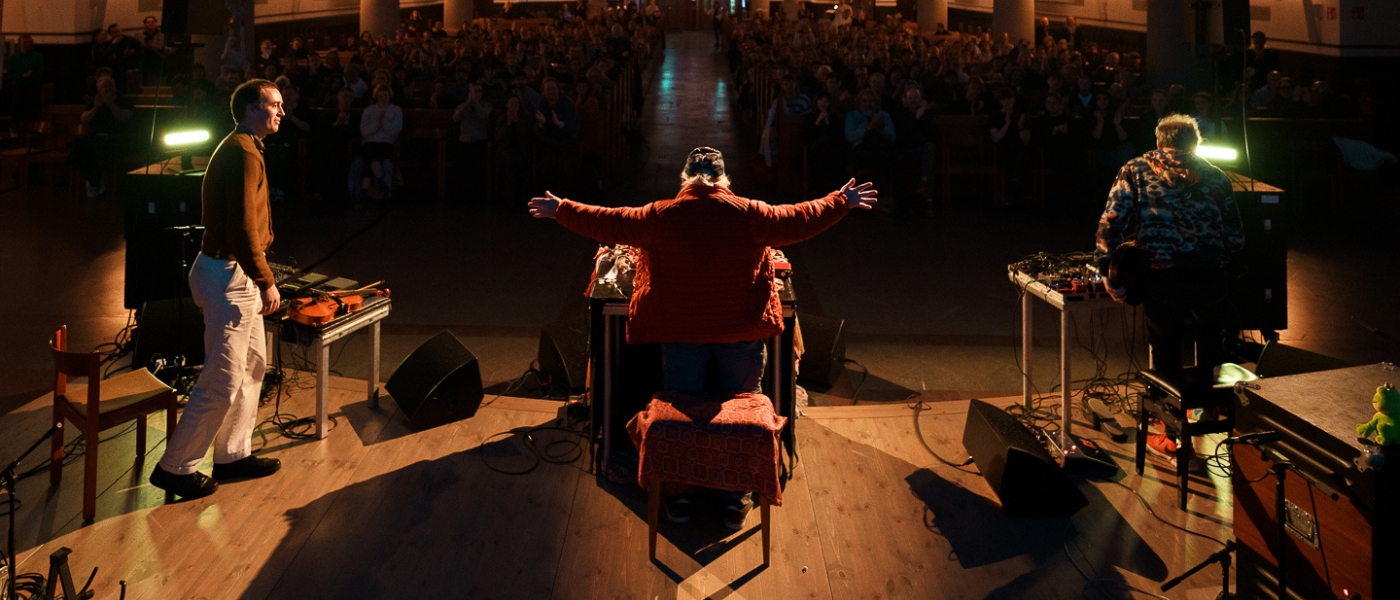
Charlemagne Palestine (1947) is een Amerikaans componist, performer en beeldend kunstenaar, bekend als een invloedrijke figuur binnen de New Yorkse minimalistische muziek, al noemt hij zichzelf liever een maximalist. Zijn rituele, langdurige klankstukken voor piano, orgel, elektronica en stem, zoals Strumming Music en Four Manifestations on Six Elements, gelden als iconische werken. Sinds de jaren 1990 woont en werkt hij vooral in Brussel.
Daniel O’Sullivan is een Londense componist, songwriter, multi-instrumentalist en producer die sinds de late jaren 90 een bepalende kracht is binnen de experimentele muziek. Hij werkte met groepen als Ulver, Sunn O))), Grumbling Fur, Æthenor en This Is Not This Heat. In zijn hybride klankwereld botsen oude en moderne werelden met elkaar en verwerkt hij renaissancemuziek, moderne sacrale muziek en minimalisme. Hij richt zich op klankkleur, samenspel van lijnen en een mysterieuze energie die zowel doet denken aan oude tradities als aan modern psychedelisch onderzoek.
Oren Ambarchi is een Australische componist en gitarist die sinds de late jaren 90 grensverleggende muziekvormen ontwikkelt tussen elektronica, minimalisme, improvisatie en uitgebeende rock. Zijn werk reikt van fragiele texturen naar diepe, basrijke drones. Hij werkte samen met onder meer Fennesz, Charlemagne Palestine, Sunn O))) en Keiji Haino, en bracht talloze invloedrijke releases uit op labels als Touch, Editions Mego en Drag City.
Fuji|||||||||||ta - Background information
De Japanse geluidskunstenaar Fuji|||||||||||ta werkt sinds 2009 met zelfgebouwde pijporgels zonder toetsenbord. Hij gebruikt orgelpijpen voor het onderzoeken en hoorbaar maken van akoestische verschijnselen, zoals verschiltonen en zwevingen. Dat zijn geluiden die ontstaan wanneer tonen die heel dicht bij elkaar liggen tegelijk klinken. Soms combineert hij de klanken van het instrument met zijn eigen stem.
Zijn meest recente werk heeft hij A School of Sardines in the Pipe genoemd. Hij omschrijft de muziek als uiterst minimalistisch. ‘Ik concentreer me op de beweging van lucht en geluid’, schrijft hij. ‘Daarbij maak ik gebruik van twee orgelpijpen en airbrushes, verfspuiten die werken met variabele luchtdruk. Ik plaats in beide pijpen een microfoon en blaas met de airbrushes op de spleet van de pijpen. Met andere woorden, het is alsof rechtstreeks op een microfoon blaast om geluid te produceren. Het is een heel simpel akoestisch systeem, maar juist door zijn eenvoud kan het talloze variaties genereren. De hoek waaronder de pijp aangeblazen wordt, de afstand tussen de airbrush en de orgelpijp en de beweging van mijn lichaam resulteren allemaal in verschillende klanken.’
Om al die klanken goed tot hun recht te laten komen heeft hij een krachtige en hoogwaardige geluidsinstallatie nodig. ‘Dit werk is niet gebaseerd op complexe muzikale variaties, maar richt zich vooral op de beweging van geluidsgolven. Het is alsof je het geluid van de wind tijdens een tyfoon van nabij volgt. Als het geluidssysteem niet goed genoeg is, kan dat de uiteindelijke beleving aanzienlijk minder interessant maken.’
Fuji|||||||||||ta - Biography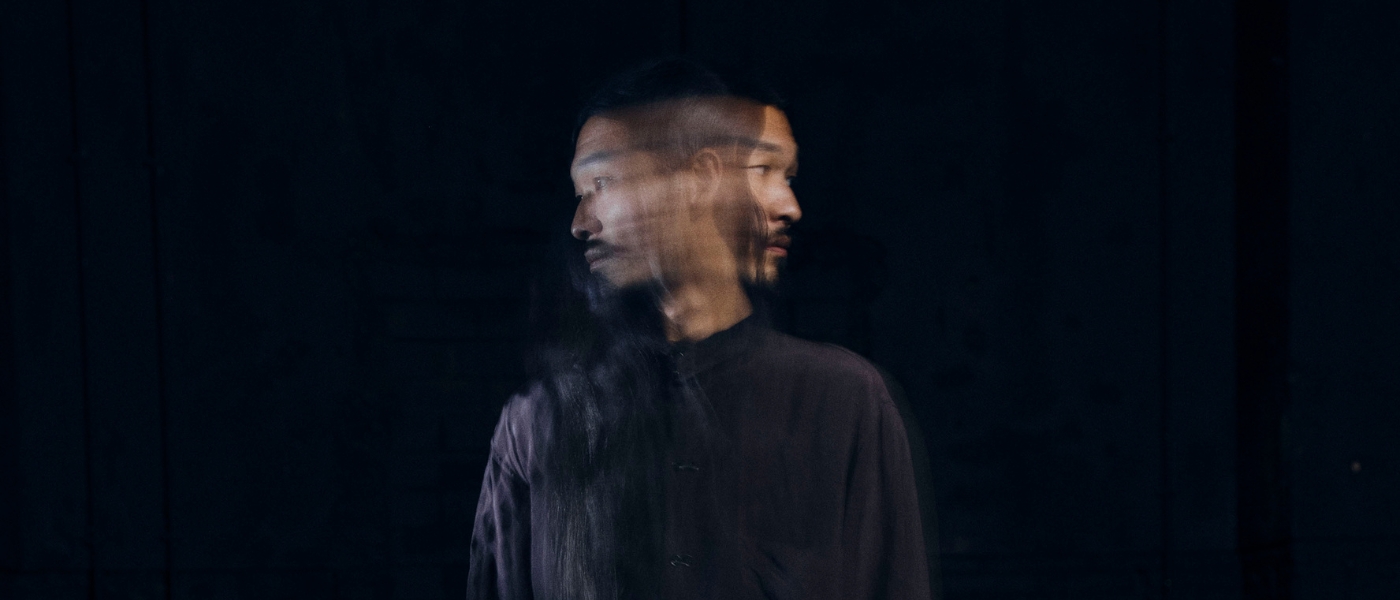
FUJI|||||||||||TA (Yosuke Fujita) is een Japanse soundartist die zijn roots vindt in gagaku, de traditionele Japanse hofmuziek. Autodidactisch ontwikkelde hij een geheel eigen taal rond zijn zelfgebouwde 11‑pijps orgel. Zijn hypnotische klankwerelden ontstonden uit samenwerkingen met o.a. Akio Suzuki, Claire Rousay en Tomoko Hojo, en omarmen lucht, water en stem als levende klankbronnen.
Tekst: René van Peer
Fri 17 April
18.00 / OCCAM DELTA XXIII
Program
Éliane Radigue, Carol Robinson OCCAM DELTA XXIII
Credits
Ensemble Klang
Pavla Beranová light design
Background information
Ensemble Klang from The Hague performs OCCAM HEXA V and OCCAM DELTA XXIII, two works by the French composer Éliane Radigue, who passed away earlier this year at the age of 94, and Carol Robinson. After working in the 1950s with musique concrète pioneer Pierre Schaeffer and electronicmusic composer Pierre Henry, Radigue initially devoted herself to feedback systems. Her career took a new turn when she began working with the ARP 2500 synthesizer, creating music rooted in intensive, detailed listening. She applied the same principle from 2005 onward in the final phase of her career, in the OCCAM series for acoustic instruments.
The music arose from onetoone contact between Radigue and the performers. She encouraged musicians to explore the outer limits of their instruments and to imagine water while doing so. The early works were written for solo instruments; later she collaborated with duos and larger ensembles such as the French ONCEIM and Ensemble Klang. One of the people with whom Radigue worked closely is reed player Carol Robinson, who has taken it upon herself to carry the composer’s work forward.
Together with Robinson, Klang developed OCCAM HEXA V in 2021 for a performance at Willem Twee Toonzaal in Den Bosch. They drew inspiration from the Binnendieze, the underground canal flowing beneath the venue. For OCCAM DELTA XXIII, created shortly before Radigue’s passing, Klang was guided by the image of the North Sea. “It’s a completely different way of working,” says Klang’s artistic director and guitarist Pete Harden. “There are no written instructions. You’re simply listening to one another, feeling and breathing together. The result resembles a sound sculpture suspended in the air. Together you have to keep it aloft.”
Biographies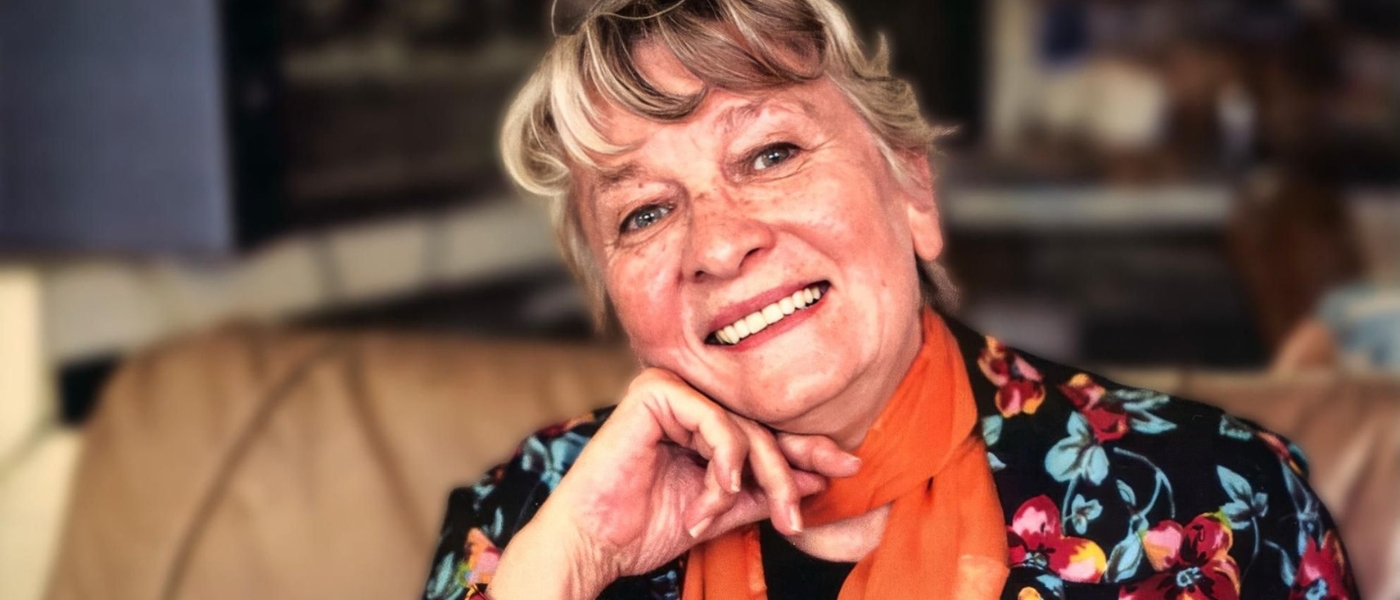 Éliane Radigue (1932 – 2026) was a French composer and pioneer of tape and synthesizer music. In the 1950s she became fascinated by musique concrète, based on everyday sounds, and worked closely with Pierre Schaeffer and Pierre Henry, two of the movement’s key figures. She later developed her own minimalist language in New York, centered on feedback, long tape loops, and later the ARP 2500. She collaborated with composers such as James Tenney and Laurie Spiegel and created expansive cycles such as Adnos and Trilogie de la Mort. Her music was strongly influenced by Buddhism and the power of simplicity.
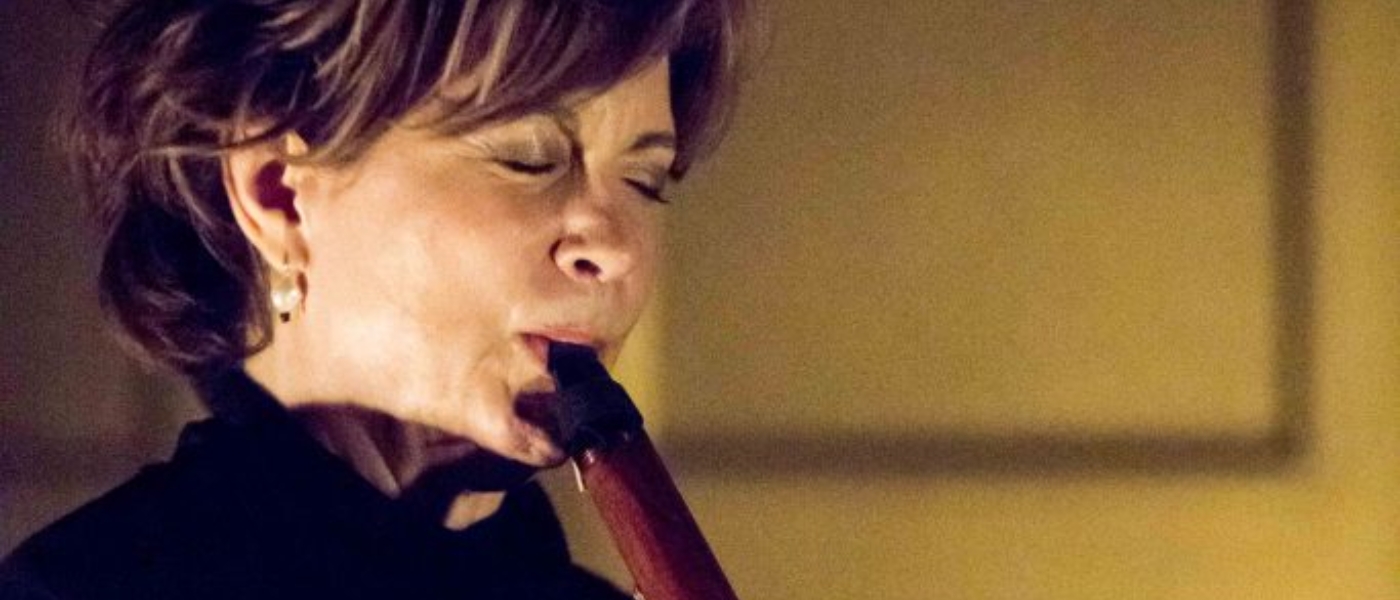
Carol Robinson (1956) is a Franco-American composer and reed player specializing in clarinet and bass clarinet. She studied at the Oberlin Conservatory and later settled in Paris, where she became a leading interpreter of contemporary and experimental music. She composes for a wide range of ensembles, often incorporating electronics, and collaborates extensively with choreographers and visual artists.
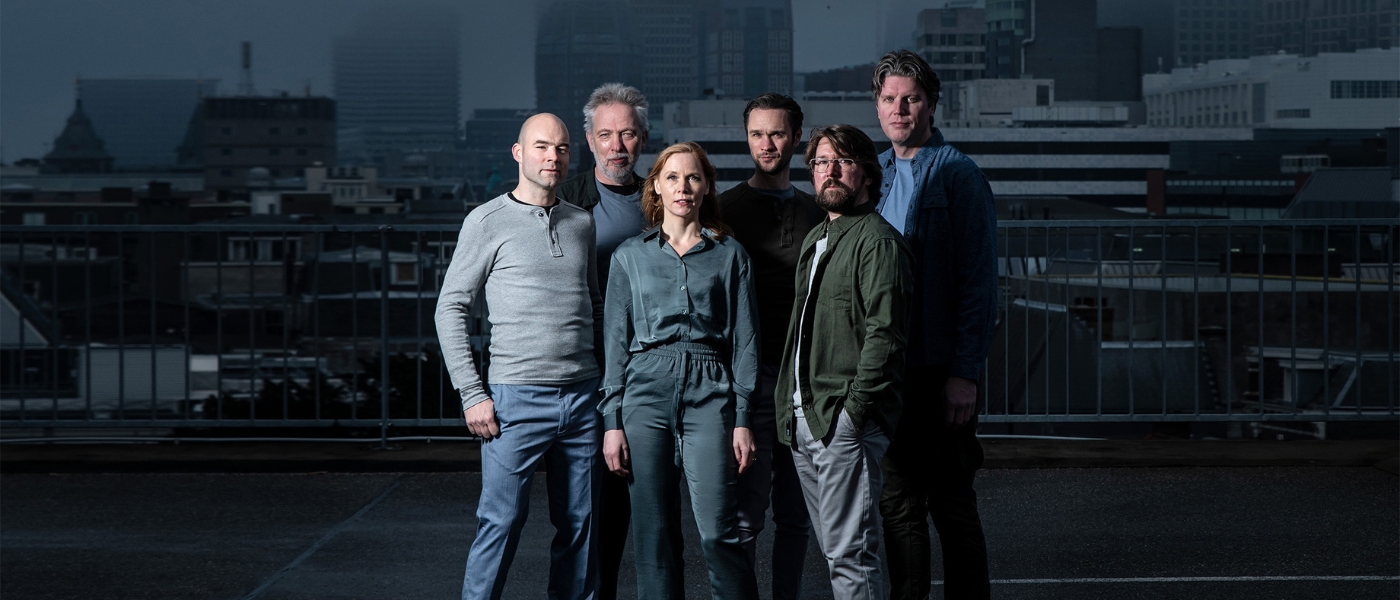
Founded in 2003, Ensemble Klang has rapidly grown, thanks to their innovative programs, commissions from today’s most exciting composers, and their own record label, into “one of the top ensembles” (NRC Handelsblad). Ensemble Klang has collaborated with leading composers such as Heiner Goebbels, David Lang, Tom Johnson, Julia Wolfe, and Peter Adriaansz. Their unique, versatile instrumentation (saxophones, trombone, keyboards, percussion, guitar, electronics) gives the group the drive and energy of a band.
Pavla Beranová (1984) is a Czech light artist and designer working at the intersection of performance, installation art, and scenography. Her practice began at the Théâtre de Nîmes and continued to develop at the Archa Theatre in Prague. She has worked for international companies and studios, including Lumières Studio Odile Soudant and ACT Lighting Design in Brussels, creating light installations, dance productions, and exhibition lighting across Europe.
Tekst: René van Peer
19.00 / Sarathy Korwar
Program
Sarathy Korwar There is beauty, there already
Credits
Sarathy Korwar drums, tabla, electronics
Magnus Mehta balophone, marimba, percussion
Donna Thomson drums, electronics
Gurdain Singh Rayatt tabla
Background information
The British composer and producer Sarathy Korwar presents a live version of his recent album There Is Beauty, There Already with a fourpiece ensemble of percussionists. “Drums are too often restricted,” Korwar says. “They’re positioned as support, in the background, purely functional. But when you listen closely, they open up. There is depth in their sound, a whole range of resonances that rarely get the space they deserve. Remove everything around them and a drum begins to reveal its full expressive power.”
“What happens when an ensemble of drums takes center stage—not as accompaniment, but as equals, even as leaders? Things begin to shift. Hierarchies disappear. Communication starts to move in circles, becoming fluid. Each voice listens, responds, interrupts, encourages. It’s no longer about keeping time. What once was a fixed rhythm starts to take on a new shape.”
“Our music is rooted partly in Indian classical rhythms, but equally in a kind of sensitivity that looks far beyond those traditions, connecting genres. With a mixture of minimalism, improvisation, and interlocking counterrhythms, the structure is both grounded and open. Cyclical patterns emerge, overlap, dissolve. They lock together and let go again. There’s interplay between discipline and freedom. In the space that opens up, the music begins to breathe. What unfolds is more than rhythm alone. It is an entire sound world in which the drum is no longer subordinate, but master of its own presence.”
Biographies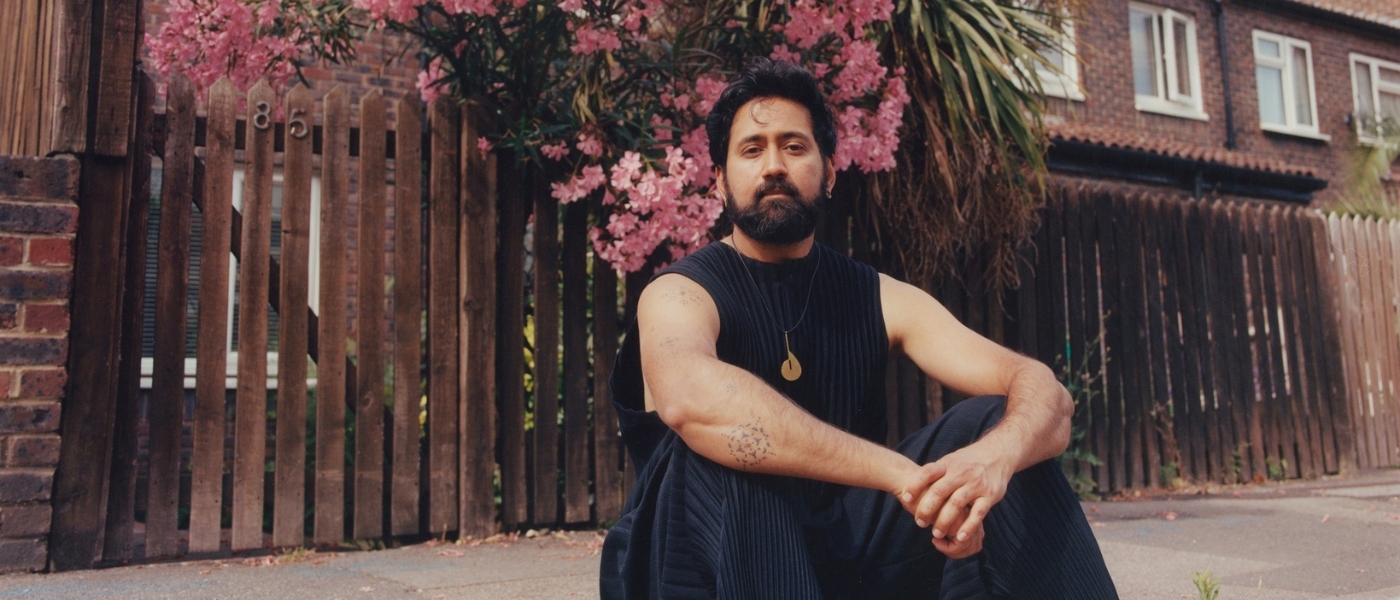 Sarathy Korwar is a U.S.-born, Indiaraised and Londonbased drummer, percussionist and composer. He is known for collaborations with jazz saxophonist Shabaka Hutchings and sitarist Anoushka Shankar. His work blends jazz, Indojazz, hip-hop and electronic music. He studied tabla in India before continuing his training at SOAS in London. His albums Day To Day, More Arriving and KALAK received international acclaim, with More Arriving winning the AIM Award for Best Independent Album.
Magnus Mehta is a Londonbased percussionist, composer, producer and musical director, born to an Indian father and Scottish mother. After studying percussion at the Royal Conservatoire of Scotland, he continued his musical training in Cuba, Morocco, Kerala and Turkey. He has worked with artists such as Jacob Collier, Brian Eno, Sarathy Korwar and Ibibio Sound Machine, and is an associate artist at Shakespeare’s Globe.
Donna Thompson is a British drummer, singersongwriter and multiinstrumentalist from London. She grew up with Motown, gospel and soul and became active in the jazz and altsoul scene as part of the Total Refreshment Centre community. Following her years as frontwoman of Lightboxes, she released her debut EP Something True on PRAH Recordings in 2022. Her work blends jazzy grooves with R&B, folk and cinematic sound textures.
Gurdain Singh Rayatt is one of the leading tabla players in the United Kingdom. Trained by his father Harkirat Singh Rayatt, his grandfather Bhai Gurmeet Singh Virdee and later by tabla legend Shankar Ghosh, he represents the Punjab, Benares and Farukhabad gharanas. He performs internationally with top musicians including Ustad Amjad Ali Khan, Shahid Parvez and Anoushka Shankar.
Text: René van Peer
19.30 / OCCAM HEXA V
Program
Éliane Radigue, Carol Robinson OCCAM HEXA X
Credits
Ensemble Klang
Pavla Beranová light design
Background information
Ensemble Klang from The Hague performs OCCAM HEXA V and OCCAM DELTA XXIII, two works by the French composer Éliane Radigue, who passed away earlier this year at the age of 94, and Carol Robinson. After working in the 1950s with musique concrète pioneer Pierre Schaeffer and electronicmusic composer Pierre Henry, Radigue initially devoted herself to feedback systems. Her career took a new turn when she began working with the ARP 2500 synthesizer, creating music rooted in intensive, detailed listening. She applied the same principle from 2005 onward in the final phase of her career, in the OCCAM series for acoustic instruments.
The music arose from onetoone contact between Radigue and the performers. She encouraged musicians to explore the outer limits of their instruments and to imagine water while doing so. The early works were written for solo instruments; later she collaborated with duos and larger ensembles such as the French ONCEIM and Ensemble Klang. One of the people with whom Radigue worked closely is reed player Carol Robinson, who has taken it upon herself to carry the composer’s work forward.
Together with Robinson, Klang developed OCCAM HEXA V in 2021 for a performance at Willem Twee Toonzaal in Den Bosch. They drew inspiration from the Binnendieze, the underground canal flowing beneath the venue. For OCCAM DELTA XXIII, created shortly before Radigue’s passing, Klang was guided by the image of the North Sea. “It’s a completely different way of working,” says Klang’s artistic director and guitarist Pete Harden. “There are no written instructions. You’re simply listening to one another, feeling and breathing together. The result resembles a sound sculpture suspended in the air. Together you have to keep it aloft.”
BiographiesÉliane Radigue (1932 – 2026) was a French composer and pioneer of tape and synthesizer music. In the 1950s she became fascinated by musique concrète, based on everyday sounds, and worked closely with Pierre Schaeffer and Pierre Henry, two of the movement’s key figures. She later developed her own minimalist language in New York, centered on feedback, long tape loops, and later the ARP 2500. She collaborated with composers such as James Tenney and Laurie Spiegel and created expansive cycles such as Adnos and Trilogie de la Mort. Her music was strongly influenced by Buddhism and the power of simplicity.
Carol Robinson (1956) is a Franco-American composer and reed player specializing in clarinet and bass clarinet. She studied at the Oberlin Conservatory and later settled in Paris, where she became a leading interpreter of contemporary and experimental music. She composes for a wide range of ensembles, often incorporating electronics, and collaborates extensively with choreographers and visual artists.
Founded in 2003, Ensemble Klang has rapidly grown, thanks to their innovative programs, commissions from today’s most exciting composers, and their own record label, into “one of the top ensembles” (NRC Handelsblad). Ensemble Klang has collaborated with leading composers such as Heiner Goebbels, David Lang, Tom Johnson, Julia Wolfe, and Peter Adriaansz. Their unique, versatile instrumentation (saxophones, trombone, keyboards, percussion, guitar, electronics) gives the group the drive and energy of a band.
Pavla Beranová (1984) is a Czech light artist and designer working at the intersection of performance, installation art, and scenography. Her practice began at the Théâtre de Nîmes and continued to develop at the Archa Theatre in Prague. She has worked for international companies and studios, including Lumières Studio Odile Soudant and ACT Lighting Design in Brussels, creating light installations, dance productions, and exhibition lighting across Europe.
Tekst: René van Peer
20.30 / Terry Riley 90
Program
Terry Riley A Rainbow in Curved Air (arr. Gyan Riley)
Terry Riley In C
Credits
Bang on a Can All-Stars:
Chris Lightcap bass
David Cossin percussion
David Friend piano
Arlen Hlusko cello
Taylor Levine guitar
Ken Thomson clarinet
Guest musicians:
Jeffrey Bruinsma violin
Frank Wienk percussion
Tineke Postma saxophone
Jawa Manla ud
Andrew Cotton sound engineer
Background information
At a festival devoted to minimal music, a pioneer like Terry Riley, who turned 90 in 2025, cannot be absent. Bang on a Can All-Stars perform two of his most influential works: A Rainbow in Curved Air and In C. The latter inspired composers such as Philip Glass, Steve Reich and Julius Eastman, while echoes of A Rainbow in Curved Air can be heard on Soft Machine’s album Third and in The Who’s Baba O’Riley, named after the composer.
Composed in 1964, In C is perhaps the most frequently performed work in the genre. The score consists of 53 short patterns that the musicians must play in order, though they may repeat or skip patterns. The performance ends when every musician reaches and plays the final pattern. What matters most is that each performer remains acutely aware of what the others are doing. Riley prescribed no specific instrumentation, so In C can be performed by ensembles of virtually any kind. There are classical interpretations as well as versions by punk and metal bands. In the Netherlands, In C was recorded by the Ragazze Quartet with Slagwerk Den Haag (now HIIIT). For this performance, four Dutch guest musicians take part: Jeffrey Bruinsma (violin), Jawa Mania (oud), Tineke Postma (soprano saxophone), and Frank Wienk (percussion).
The original version of A Rainbow in Curved Air consists of layered improvisations. Riley overdubbing himself on keyboards and percussion for the 1969 album of the same name. He plays rapid, high-register solos over a backdrop of chords and slower notes in the lower register. The piece merges two of Riley’s long-standing influences: Indian classical music and jazz. At the Minimal Music Festival, it is performed in an arrangement by Riley’s son, Gyan.
Biographies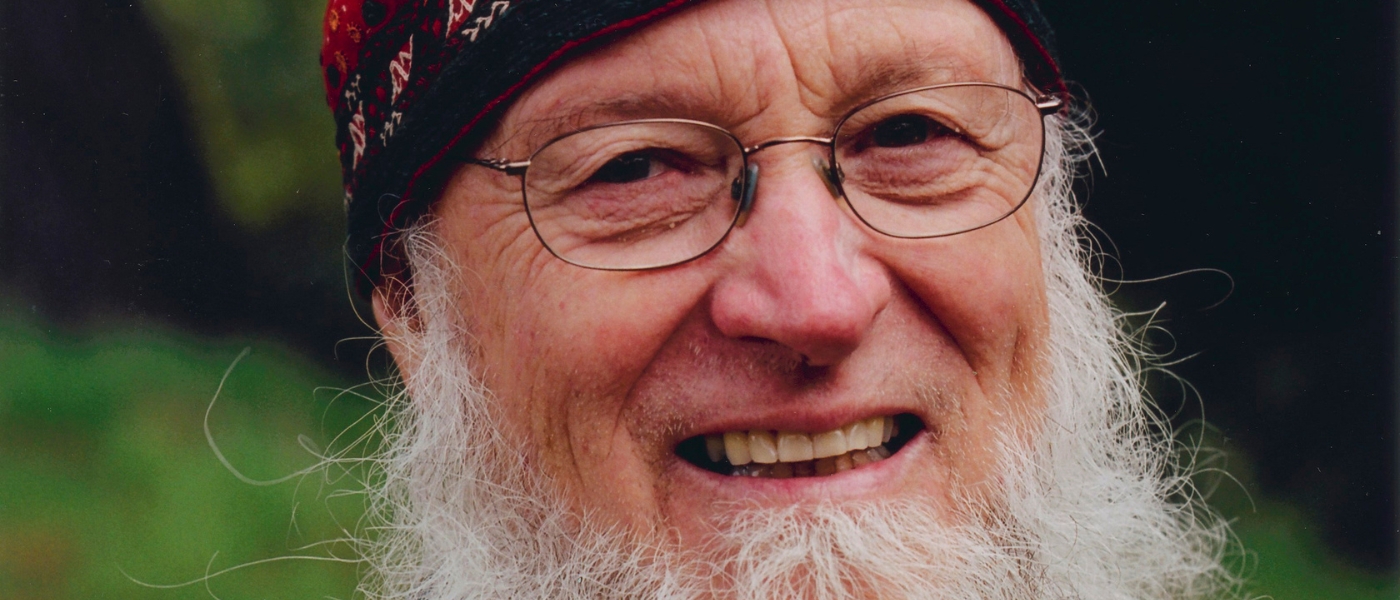 Terry Riley (1935) is a Californian composer and a pioneer of minimalism. With In C (1964) he introduced a revolutionary form based on interlocking patterns that profoundly shaped the course of 20thcentury music. His hypnotic, Easterninflected improvisations and tape experiments made him a central figure in the movement, while his longterm collaboration with La Monte Young, his studies with raga master Pandit Pran Nath, and his extensive body of work for the Kronos Quartet all underscore his lasting influence.
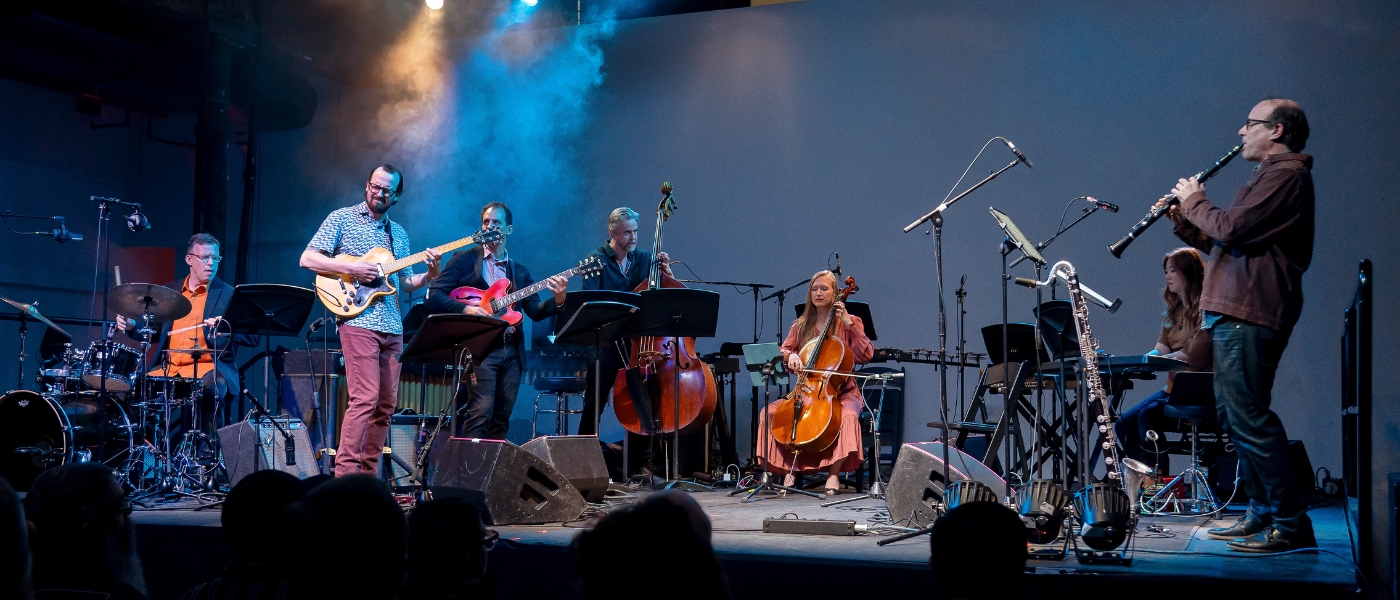 The Bang on a Can All-Stars, founded in 1992 in New York, form a sixmember amplified ensemble renowned worldwide for their highenergy performances and groundbreaking projects. Moving effortlessly between classical, jazz, rock, world and experimental music, they have forged a genre of their own. They have collaborated with composers such as Steve Reich, Terry Riley, Meredith Monk and Ornette Coleman, and have been hailed by the San Francisco Chronicle as “the country’s most important vehicle for contemporary music.”
Jeffrey Bruinsma is one of the leading jazz violinists in the Netherlands. He studied classical and jazz violin at the Royal Conservatoire The Hague and the Conservatorium van Amsterdam, graduating cum laude in 2002. In 2006 he won the Deloitte Jazz Award. He leads the Bruinsma Syndicaat, has performed with groups such as Zapp4 and Pynarello, composes for dance and theatre, and teaches jazz violin in Amsterdam and The Hague.
Frank Wienk, also known as BINKBEATS, is a Dutch percussionist, multiinstrumentalist, producer and composer. He studied drums and percussion at the Royal Conservatoire in The Hague and gained international recognition with his Beats Unraveled video series, in which he reconstructs complex electronic tracks live. His work bridges percussion, electronic music and acoustic experimentation, spanning genres from IDM and jazz to ambient, hip-hop and minimalism.
Tineke Postma is one of the foremost Dutch jazz saxophonists. With her lyrical, adventurous style, she performs worldwide and has released several internationally acclaimed albums. She has collaborated with artists such as Terri Lyne Carrington, Dianne Reeves, Kenny Barron and Herbie Hancock, and has received numerous honors including the Buma Boy Edgar Prize, the Edison Award, and the title of DownBeat Rising Star (2019).
Jawa Manla is a Syrian oud player and vocalist from Aleppo, raised in Damascus. She studied at the Sulhi AlWadi Institute, continued her training with Naseer Shamma in Cairo and Nacati Celik in Istanbul, and has lived in the Netherlands since 2015, where she has become a distinctive voice in Arabic music. Her acclaimed 2023 debut album Distant Roots was named one of the best Dutch albums of the year.
Tekst: René van Peer
22.30 / mundu lawaai + Bimini
Program
Gabriel de Oliveira mundu lawaai
Frank Rosaly Bimini
Credits
Gabriel de Oliveira guitar, vocals
Kroes keyboard, synthesizer
Niels Luteijn drums
Alek Kurniawan live electronics
Jelle Huizinga vocals
Frank Rosaly drums, percussions
Noortje van den Eijnde light projection, programming
mundu lawaai - Background information
Brazilian composer and guitarist Gabriel de Oliveira consulted several sources in creating mundu lawaai. First, he explored the Brazilian styles folia de reis and congada from Minas Gerais, where his grandparents come from, as well as maracatu from Pernambuco. In these regions he connected with musicians who preserve and reinterpret longsuppressed traditions from Brazil’s colonial past through percussion and poetry. Another source was Sonic Ecologies of Black Music in the Early 21st Century, an analysis of Black dancemusic styles from Chicago, Detroit and London. “That book doesn’t just describe the music and its social context—it also shows the impact the music has on the identity of the places it comes from,” De Oliveira says.
“I dove into archives with field recordings of Brazilian and Indonesian music and made recordings myself. There is a line connecting ancient folk traditions to the music you hear in today’s dance clubs. In the music we make, we don’t distinguish between old and new; local traditions take on a universal value.”
“The first piece we worked on takes the form of maracatu: in the rhythms we play and in the callandresponse between the voice and the rest of the band. We use samples from archival materials and from my own field recordings, alongside electronic drums typical of Brazilian and Indonesian sound systems. The band improvises with all these elements. Everything we play goes through a mixer, where Alek Kurniawan processes our input using dub techniques, like reggae pioneer Lee ‘Scratch’ Perry did in his music. It would be wonderful if we can get the audience to dance!”
Bimini - Background information
Frank Rosaly, who has lived in Amsterdam since 2016, is a Puerto Rican-American drummer, composer, sound designer and organizer with an extensive list of albums and collaborations to his name. For his solo percussion performance Bimini (“twin” in one of the Caribbean languages), he delved into the ritual musical traditions of the Taíno, the nearly extinct Indigenous people of Puerto Rico.
Rosaly performs Bimini on paired sets of instruments, such as two bass drums and two gongs. These twinned instruments interact in harmonious dialogue. The music is rooted in his mixed heritage—Indigenous, African, and Spanish—resulting in complex cultural encounters within the performance. He sees these encounters as emblematic of humanity itself: a dualnatured being longing for balanced coexistence. In the music, Rosaly draws on techniques with spiritual origins and meanings: composite rhythms, repetition, patterns inspired by ancient woven textiles, and sound sources that evoke trance states. Through this, he aims to break away from the traditional separation between performer and audience, transforming the performance into a collective experience.
That experience is amplified by contrasting light projections by Noortje van den Eijnde. “I want to fuse space, rhythm, sound, image, and time into a ceremonylike experience,” Rosaly says. “What I envision is a world full of ancient knowledge slowly coming into bloom. The audience experiences this as if they are in a dimly lit club, evoking a sense of connection. Carefully combined, these elements can break free from genre and evolve into something between theater and concert.”
Gabriel de Oliveira’s mundu lawaai was made possible with the support of Space is the Place, an organization that regularly helps initiate new bands by inspiring musicians from Amsterdam’s creative music scene.
Biographies.jpg)
Gabriel de Oliveira is a Brazilian guitarist, composer and vocalist specializing in 8string guitar, electronics and voice. His work brings together songwriting, regional Brazilian rhythms and choral textures with personal, documentary elements. His project Where Dona Nina Saw The Fire, for example, explores the stories and lived world of his grandmother, translating them into intimate compositions woven from acoustic and electronic sources.
Kroes (AKroes) is a Dutch producer and audio engineer who has been making electronic music for games, television and other media since 2006. His work consists of synthesizerdriven soundtracks, ranging from retroinspired 80s/90s aesthetics to modern game loops. He composes and produces in Ableton Live and Reason, and has released more than 160 tracks on SoundClick.
Niels Luteijn is a drummer and educator based in The Hague. He began drumming at age nine and was admitted to the Young Talent Class of the Prins Claus Conservatory at fifteen. After earning his bachelor’s degree in Jazz Drums at the Conservatorium van Amsterdam, he performed in venues such as Paradiso, Melkweg and TivoliVredenburg, and contributed to various studio projects as performer and teacher.
Alek Kurniawan is an Amsterdambased liveelectronics artist and sound engineer. After studying Audio Engineering & Sound Design at the Abbey Road Institute, he specialized in live sound for electronic acts at Garage Noord. His work combines technical precision with a sensitive ear for club and experimental electronics, and he is active both as a performing musician and an audio consultant.
Jelle Huizinga is a performer and vocalist who graduated from the Maastricht Academy of Performing Arts in 2024. His work blends rap, singing and postpunk into raw, physical music performances where vulnerability and adrenaline collide. With works such as ZUCHT, he explores personal themes of struggle and selfdestruction, creating live music that comes fully alive only in direct encounter with the audience.
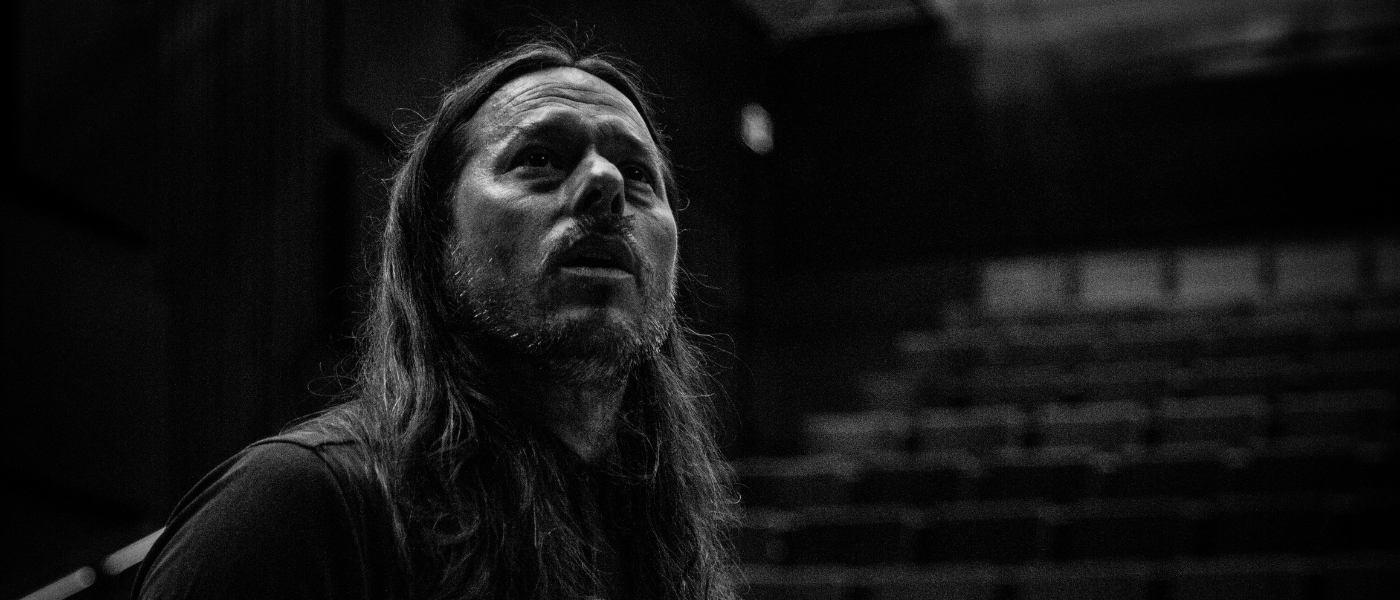
Frank Rosaly is a Puerto Rican drummer, composer and sound designer living in Amsterdam. His musical approach stems from an exhaustive study of jazz, classical percussion, improvisation, as well as classical composition and post-classical techniques such as musique concrète, graphic notation and chance operation. This information is filtered through the prism of metaphysics, ancient history, rituals and folklore of Latin America and the Caribbean. After fifteen years working in Chicago, he relocated to Amsterdam and became a key figure in the local and international creative music scene. He appears on over 150 recordings.
Noortje van den Eijnde is a Dutch video artist and VJ (Noralie). She worked for many years with artists such as Eefje de Visser, The Opposites and the Radio Philharmonic Orchestra. She then expanded her practice with video mapping and scenography for companies including Silbersee, Orkater and Wunderbaum. Her digital installation To Be Continued was nominated for a Golden Calf. She currently creates immersive video works in which introspection, stillness and water play a central role.
Text: René van Peer
Sat 18 April
11.00 / SOVT
Programma
Sarah Hennies SOVT
Uitvoerenden
richi valitutto prepared piano
Achtergrondinformatie
Pianist richi valitutto voert het werk SOVT uit van componist en slagwerker Sarah Hennies. SOVT, een afkorting van Semi-Occluded Vocal Tract (gedeeltelijke afsluiting van het spraakorgaan), verwijst naar een van de oefeningen die gebruikt worden om stembanden te versterken door te zingen met een rietje in de mond. Transvrouwen kunnen die oefeningen doen om hun stem vrouwelijker te laten klinken. Hennies kwam hiermee in aanraking tijdens een cursus. Ze schreef SOVT voor geprepareerde piano. Door de snaren te verbinden met Blu Tack transformeert ze het instrument tot een heel nieuw klanklichaam. Het geluid houdt het midden tussen een gewone piano en een slagwerkinstrument. De snaren nemen de trillingen van elkaar over wat resulteert in een grote klankenrijkdom. ‘De trillingen in de piano komen overeen met de manier waarop je een verhevigd trillen in je mond en keel voelt wanneer je door een rietje zingt’, zegt ze.
Oorspronkelijk geschreven voor R. Andrew Lee heeft valitutto het op hun repertoire genomen. ‘Door de preparatie verandert de klankwereld afhankelijk van het register en je aanslag’, aldus valitutto. ‘Lage tonen kunnen klinken als een bas synthesizer, de tonen in het midden van de piano bewegen tussen marimba en citer, de hoge tonen lijken op woodblocks. Wat me aantrekt in SOVT is dat elke frase de juiste mengeling vraagt van technische precisie, muzikale zorgvuldigheid, lichaamsbeheersing en concentratie. Het werk is een aanslag op mijn uithoudingsvermogen, maar geeft me tegelijkertijd kracht. Wat ik altijd heerlijk vind aan het spelen op geprepareerde piano is dat ik ineens de beschikking heb over deze nieuwe klanken. Ik hoop dat mensen een fysieke en inspirerende ervaring hebben, die er ongemerkt toe leidt dat ze op een andere manier luisteren.’
Biografieën
Sarah Hennies (1979) is een Amerikaanse componist en percussionist, gevestigd in Upstate New York. Haar werk onderzoekt thema’s als queer- en transidentiteit, psycho-akoestiek en de sociale en neurologische processen achter creativiteit. Ze componeert voornamelijk voor akoestische ensembles en presenteert haar werk wereldwijd. Haar audiovisuele werk Contralto (2017) kreeg brede erkenning en was finalist voor de Queer|Art Prize. Ze is Assistant Professor of Music aan Bard College.
Richi valitutto is een Grammy‑genomineerde pianist, componist en improvisator, geprezen als een 'vivid soloist' en 'all‑around go‑to new music specialist' (LA Times). Hen werkt als solist, kamermusicus en begeleider, met een sterke focus op hedendaagse muziek, prepared piano en uitgebreide speeltechnieken. Valitutto is medeoprichter van wild Up en gnarwhallaby en werkt samen met toonaangevende componisten zoals John Adams, Sofia Goebaidoelina, Meredith Monk en Steve Reich. Hen volgt momenteel een DMA aan Cornell University.
Tekst: René van Peer
13.00 / OCCAM DELTA XXIII
Program
Éliane Radigue, Carol Robinson OCCAM DELTA XXIII
Credits
Ensemble Klang
Pavla Beranová light design
Background information
Ensemble Klang from The Hague performs OCCAM HEXA V and OCCAM DELTA XXIII, two works by the French composer Éliane Radigue, who passed away earlier this year at the age of 94, and Carol Robinson. After working in the 1950s with musique concrète pioneer Pierre Schaeffer and electronicmusic composer Pierre Henry, Radigue initially devoted herself to feedback systems. Her career took a new turn when she began working with the ARP 2500 synthesizer, creating music rooted in intensive, detailed listening. She applied the same principle from 2005 onward in the final phase of her career, in the OCCAM series for acoustic instruments.
The music arose from onetoone contact between Radigue and the performers. She encouraged musicians to explore the outer limits of their instruments and to imagine water while doing so. The early works were written for solo instruments; later she collaborated with duos and larger ensembles such as the French ONCEIM and Ensemble Klang. One of the people with whom Radigue worked closely is reed player Carol Robinson, who has taken it upon herself to carry the composer’s work forward.
Together with Robinson, Klang developed OCCAM HEXA V in 2021 for a performance at Willem Twee Toonzaal in Den Bosch. They drew inspiration from the Binnendieze, the underground canal flowing beneath the venue. For OCCAM DELTA XXIII, created shortly before Radigue’s passing, Klang was guided by the image of the North Sea. “It’s a completely different way of working,” says Klang’s artistic director and guitarist Pete Harden. “There are no written instructions. You’re simply listening to one another, feeling and breathing together. The result resembles a sound sculpture suspended in the air. Together you have to keep it aloft.”
BiographiesÉliane Radigue (1932 – 2026) was a French composer and pioneer of tape and synthesizer music. In the 1950s she became fascinated by musique concrète, based on everyday sounds, and worked closely with Pierre Schaeffer and Pierre Henry, two of the movement’s key figures. She later developed her own minimalist language in New York, centered on feedback, long tape loops, and later the ARP 2500. She collaborated with composers such as James Tenney and Laurie Spiegel and created expansive cycles such as Adnos and Trilogie de la Mort. Her music was strongly influenced by Buddhism and the power of simplicity.
Carol Robinson (1956) is a Franco-American composer and reed player specializing in clarinet and bass clarinet. She studied at the Oberlin Conservatory and later settled in Paris, where she became a leading interpreter of contemporary and experimental music. She composes for a wide range of ensembles, often incorporating electronics, and collaborates extensively with choreographers and visual artists.
Founded in 2003, Ensemble Klang has rapidly grown, thanks to their innovative programs, commissions from today’s most exciting composers, and their own record label, into “one of the top ensembles” (NRC Handelsblad). Ensemble Klang has collaborated with leading composers such as Heiner Goebbels, David Lang, Tom Johnson, Julia Wolfe, and Peter Adriaansz. Their unique, versatile instrumentation (saxophones, trombone, keyboards, percussion, guitar, electronics) gives the group the drive and energy of a band.
Pavla Beranová (1984) is a Czech light artist and designer working at the intersection of performance, installation art, and scenography. Her practice began at the Théâtre de Nîmes and continued to develop at the Archa Theatre in Prague. She has worked for international companies and studios, including Lumières Studio Odile Soudant and ACT Lighting Design in Brussels, creating light installations, dance productions, and exhibition lighting across Europe.
Tekst: René van Peer
14.00 / Primordial / Lift
Program
Pauline Oliveros Primordial / Lift
Credits
MAZE:
Anne La Berge flute, electronics
Dario Calderone double bass
Gareth Davis bass clarinet
Wiek Hijmans electric guitar
Reinier van Houdt piano, keyboards
Yannis Kyriakides oscillator, processing
Background information
Primordial/Lift is a twopart composition by the American accordionist and composer Pauline Oliveros. In Primordial, five musicians from Ensemble MAZE are asked to take physical processes as the starting point for their playing: cell division, blood circulation, muscle activity, electrical activity in the nervous system. These terms are written in the score in a circle around “listening,” a concept that lies at the core of all of Oliveros’ work. The musicians not only play sounds evoked by these processes, they must also continually adapt their music to one another.
Running underneath the piece is a sinus tone from a tone generator that climbs over the course of 45 minutes from 7.8 to 13 hertz. These frequencies range from inaudible to barely audible, yet they influence the sound produced by the five musicians. The performer controlling the tone generator, the ensemble’s sixth member, Yannis Kyriakides, can bring different combinations of players to the foreground via a mixing console and electronically shape their sound. Oliveros chose this shifting frequency based on the idea that the extremely low frequencies of waves encircling the Earth would rise over a span of fifty years.
In Lift, which lasts half an hour, the sinus tone remains at a constant frequency. The musicians must imagine mental images relating to music, such as changes in pitch, as well as physical phenomena on the micro and macro scale, from the interior of an atom to black holes. Throughout, they orient themselves around a single pitch: D. Because the sine wave interacts with the musicians’ playing, the musical result differs depending on where listeners are seated in the hall. To allow the audience to experience these effects, the chairs are removed and Ensemble MAZE performs in the center of the space.
Biographies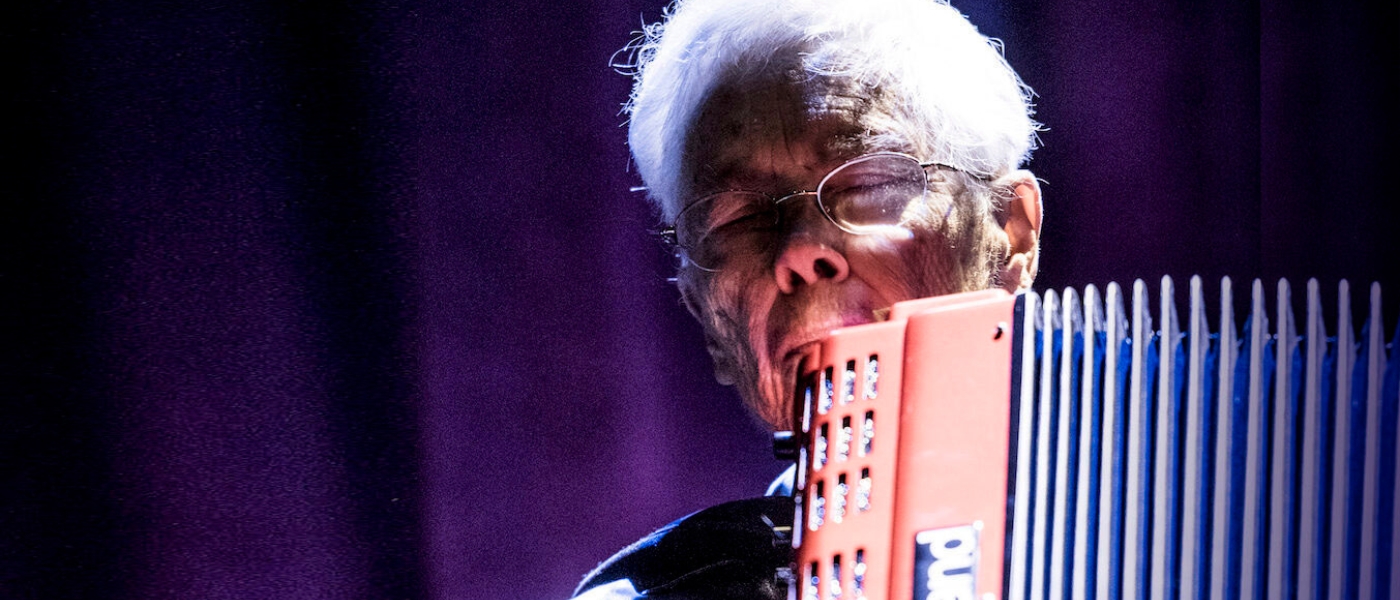
The American accordionist Pauline Oliveros (1932–2016) played a central role in the development of electronic and experimental music. She developed Deep Listening, an allembracing practice of listening at every moment. What began as a compositional approach, based on improvisation and meditation, evolved into an aesthetic principle designed to train and inspire musicians to listen with full concentration. In the 1960s she influenced American music with works involving improvisation, meditation, electronics and ritual. She was the first director of the Center for Contemporary Music (formerly the Tape Music Center at Mills College). She received four honorary doctorates and numerous awards, including the William Schuman Award and the John Cage Award.
MAZE is an Amsterdambased ensemble for experimental and exploratory music. It focuses on works that challenge traditional forms, listening perspectives and notational practices, collaborating closely with leading composers on open scores, hybrid notations and unconventional performance approaches.
Text: René van Peer
16.00 / OCCAM HEXA V
Program
Éliane Radigue, Carol Robinson OCCAM HEXA X
Credits
Ensemble Klang
Pavla Beranová light design
Background information
Ensemble Klang from The Hague performs OCCAM HEXA V and OCCAM DELTA XXIII, two works by the French composer Éliane Radigue, who passed away earlier this year at the age of 94, and Carol Robinson. After working in the 1950s with musique concrète pioneer Pierre Schaeffer and electronicmusic composer Pierre Henry, Radigue initially devoted herself to feedback systems. Her career took a new turn when she began working with the ARP 2500 synthesizer, creating music rooted in intensive, detailed listening. She applied the same principle from 2005 onward in the final phase of her career, in the OCCAM series for acoustic instruments.
The music arose from onetoone contact between Radigue and the performers. She encouraged musicians to explore the outer limits of their instruments and to imagine water while doing so. The early works were written for solo instruments; later she collaborated with duos and larger ensembles such as the French ONCEIM and Ensemble Klang. One of the people with whom Radigue worked closely is reed player Carol Robinson, who has taken it upon herself to carry the composer’s work forward.
Together with Robinson, Klang developed OCCAM HEXA V in 2021 for a performance at Willem Twee Toonzaal in Den Bosch. They drew inspiration from the Binnendieze, the underground canal flowing beneath the venue. For OCCAM DELTA XXIII, created shortly before Radigue’s passing, Klang was guided by the image of the North Sea. “It’s a completely different way of working,” says Klang’s artistic director and guitarist Pete Harden. “There are no written instructions. You’re simply listening to one another, feeling and breathing together. The result resembles a sound sculpture suspended in the air. Together you have to keep it aloft.”
BiographiesÉliane Radigue (1932 – 2026) was a French composer and pioneer of tape and synthesizer music. In the 1950s she became fascinated by musique concrète, based on everyday sounds, and worked closely with Pierre Schaeffer and Pierre Henry, two of the movement’s key figures. She later developed her own minimalist language in New York, centered on feedback, long tape loops, and later the ARP 2500. She collaborated with composers such as James Tenney and Laurie Spiegel and created expansive cycles such as Adnos and Trilogie de la Mort. Her music was strongly influenced by Buddhism and the power of simplicity.
Carol Robinson (1956) is a Franco-American composer and reed player specializing in clarinet and bass clarinet. She studied at the Oberlin Conservatory and later settled in Paris, where she became a leading interpreter of contemporary and experimental music. She composes for a wide range of ensembles, often incorporating electronics, and collaborates extensively with choreographers and visual artists.
Founded in 2003, Ensemble Klang has rapidly grown, thanks to their innovative programs, commissions from today’s most exciting composers, and their own record label, into “one of the top ensembles” (NRC Handelsblad). Ensemble Klang has collaborated with leading composers such as Heiner Goebbels, David Lang, Tom Johnson, Julia Wolfe, and Peter Adriaansz. Their unique, versatile instrumentation (saxophones, trombone, keyboards, percussion, guitar, electronics) gives the group the drive and energy of a band.
Pavla Beranová (1984) is a Czech light artist and designer working at the intersection of performance, installation art, and scenography. Her practice began at the Théâtre de Nîmes and continued to develop at the Archa Theatre in Prague. She has worked for international companies and studios, including Lumières Studio Odile Soudant and ACT Lighting Design in Brussels, creating light installations, dance productions, and exhibition lighting across Europe.
Tekst: René van Peer
19.00 / Nik Bärtsch + Tania Giannouli
Credits
Nik Bärtsch piano
Tania Giannouli piano
Background information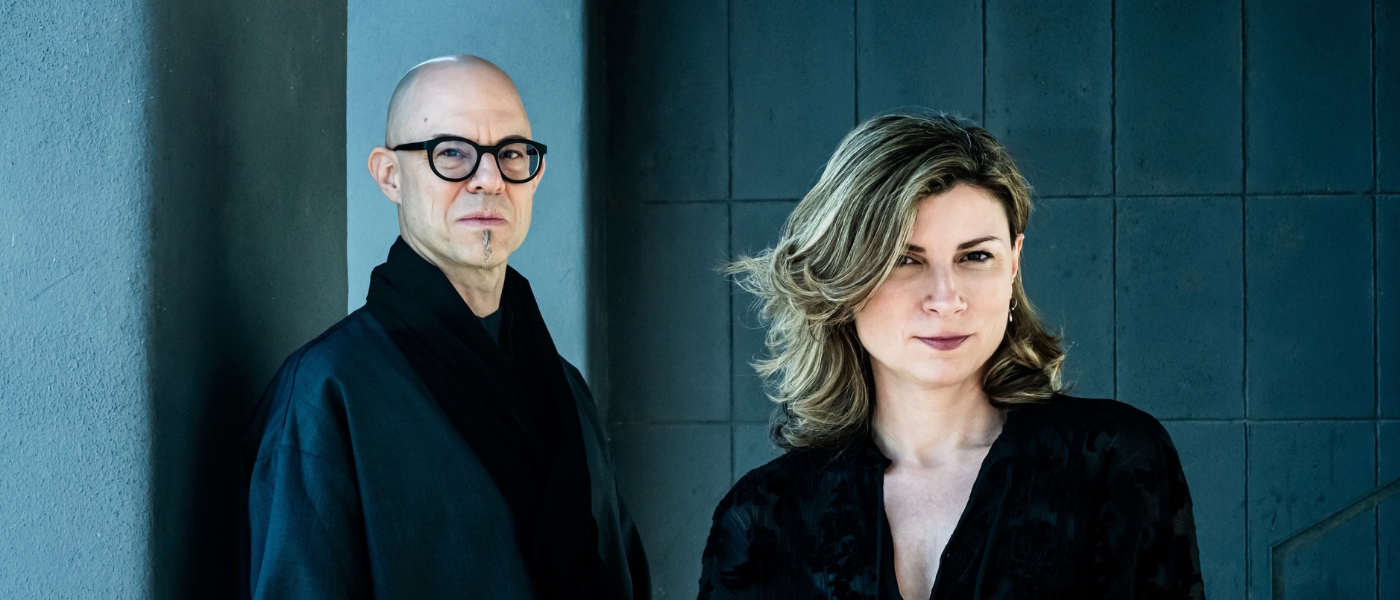 Swiss jazz pianist Nik Bärtsch and Greek pianist Tania Giannouli formed a duo after meeting at the 2022 Enjoy Jazz Festival in Germany, where they were both artists in residence. They turned out to be kindred creative spirits, fully exploring the sonic possibilities of the piano through expansive improvisations.
Bärtsch is best known for his work with Ronin, the “zenfunk” quartet he founded in 2001. Spirituality, particularly Zen Buddhism, plays an important role in his musical approach. He is guided by ideas of reduction, repetition and concentration, giving his performances a ritual quality. At the same time, he places strong emphasis on groove.
Giannouli, like Bärtsch, has a classical background. As an improvising pianist, she has frequently collaborated with musicians who play unusual instruments. She performed, for instance, with New Zealand musician and anthropologist Rob Thorne, a specialist in Māori instruments. In her trio In Fading Light she works with a trumpet player and an oud player. Her own playing transcends genre; she uses what she describes as an open musical language. She can shift in an instant from vigorously dancing chords to explorations inside the piano, plucking and touching the strings with her fingers, just as easily as she can lose herself in overtly romantic reflections.
In their joint performances, Giannouli and Bärtsch show an exceptional ability to sense and complement one another with great precision.
Text: René van Peer
19.30 / OCCAM DELTA XXIII
Program
Éliane Radigue, Carol Robinson OCCAM DELTA XXIII
Credits
Ensemble Klang
Pavla Beranová light design
Background information
Ensemble Klang from The Hague performs OCCAM HEXA V and OCCAM DELTA XXIII, two works by the French composer Éliane Radigue, who passed away earlier this year at the age of 94, and Carol Robinson. After working in the 1950s with musique concrète pioneer Pierre Schaeffer and electronicmusic composer Pierre Henry, Radigue initially devoted herself to feedback systems. Her career took a new turn when she began working with the ARP 2500 synthesizer, creating music rooted in intensive, detailed listening. She applied the same principle from 2005 onward in the final phase of her career, in the OCCAM series for acoustic instruments.
The music arose from onetoone contact between Radigue and the performers. She encouraged musicians to explore the outer limits of their instruments and to imagine water while doing so. The early works were written for solo instruments; later she collaborated with duos and larger ensembles such as the French ONCEIM and Ensemble Klang. One of the people with whom Radigue worked closely is reed player Carol Robinson, who has taken it upon herself to carry the composer’s work forward.
Together with Robinson, Klang developed OCCAM HEXA V in 2021 for a performance at Willem Twee Toonzaal in Den Bosch. They drew inspiration from the Binnendieze, the underground canal flowing beneath the venue. For OCCAM DELTA XXIII, created shortly before Radigue’s passing, Klang was guided by the image of the North Sea. “It’s a completely different way of working,” says Klang’s artistic director and guitarist Pete Harden. “There are no written instructions. You’re simply listening to one another, feeling and breathing together. The result resembles a sound sculpture suspended in the air. Together you have to keep it aloft.”
BiographiesÉliane Radigue (1932 – 2026) was a French composer and pioneer of tape and synthesizer music. In the 1950s she became fascinated by musique concrète, based on everyday sounds, and worked closely with Pierre Schaeffer and Pierre Henry, two of the movement’s key figures. She later developed her own minimalist language in New York, centered on feedback, long tape loops, and later the ARP 2500. She collaborated with composers such as James Tenney and Laurie Spiegel and created expansive cycles such as Adnos and Trilogie de la Mort. Her music was strongly influenced by Buddhism and the power of simplicity.
Carol Robinson (1956) is a Franco-American composer and reed player specializing in clarinet and bass clarinet. She studied at the Oberlin Conservatory and later settled in Paris, where she became a leading interpreter of contemporary and experimental music. She composes for a wide range of ensembles, often incorporating electronics, and collaborates extensively with choreographers and visual artists.
Founded in 2003, Ensemble Klang has rapidly grown, thanks to their innovative programs, commissions from today’s most exciting composers, and their own record label, into “one of the top ensembles” (NRC Handelsblad). Ensemble Klang has collaborated with leading composers such as Heiner Goebbels, David Lang, Tom Johnson, Julia Wolfe, and Peter Adriaansz. Their unique, versatile instrumentation (saxophones, trombone, keyboards, percussion, guitar, electronics) gives the group the drive and energy of a band.
Pavla Beranová (1984) is a Czech light artist and designer working at the intersection of performance, installation art, and scenography. Her practice began at the Théâtre de Nîmes and continued to develop at the Archa Theatre in Prague. She has worked for international companies and studios, including Lumières Studio Odile Soudant and ACT Lighting Design in Brussels, creating light installations, dance productions, and exhibition lighting across Europe.
Tekst: René van Peer
20.30 / Bendik Giske + Sam Barker & Mohammad Reza Mortazavi
Credits
Bendik Giske saxophone
Sam Barker electronics
Mohammad Reza Mortazavi daf, tombak
Bendik Giske + Sam Barker - Background information
The Norwegian saxophonist Bendik Giske and the British producer Sam Barker are both active in Berlin’s dance scene. They have now come together in Disorientations, a duo set in which they abandon forceful dance rhythms. According to Giske, they were moving within the same cultural landscape, both drawn to repetitive music that does not rely on percussion instruments. “We were both searching for new ways to integrate movement into music. I found Barker’s work incredibly inspiring. I listened closely to his 2018 EP Debiasing to understand his sense of time and pattern. We discovered how closely our musical explorations aligned. In our first sessions, it was all about finding each other without depending on a fixed pulse.”
In their collaboration, the two artists have turned their backs on relentless dance beats. Barker works with whatever Giske feeds him. “One piece we’ll perform is based on layered rhythms that I play. Another is built around the rhythm of breathing — not a strict rhythm, but more of a wave-like pattern. These are the foundations on which we develop the music. The fact that I take the lead gives us great flexibility in performance. No sound emerges from Sam’s setup until he receives something from me. The human element comes first. Each concert becomes a dialogue with the audience in the room. Together, we build a shared energy.”
The performance is enriched by light and stage design by artist Theresa Baumgartner. Baumgartner was the Visual Artist in Residence at the Biennale Musica in Venice in 2023 and 2024, where she was responsible for the lighting and staging of sound installations.
Mohammad Reza Mortazavi - Background information
Born in Iran, percussionist Mohammad Reza Mortazavi has built a reputation through his virtuosic solo performances. In them, he plays two traditional Persian percussion instruments: the tombak (a goblet drum) and the daf (a frame drum). With his fingers he coaxes from these instruments a wide range of sounds and complex rhythms. He began playing tombak at the age of six, and three years later won the national competition for the instrument for the first time. He went on to become one of Iran’s leading tombak players. For both the tombak and the daf, Mortazavi developed new playing techniques, significantly expanding the sound palette of both instruments.
At the Minimal Music Festival he will perform music from his most recent album, Nexus. On that album he uses voice and effects for the first time. The opening track, Zendegi (“life”), is based on a song whose title means “Woman, Life, Freedom.” He used the rhythm of the sung text as the foundation for his composition — a gesture toward his country of birth.
Nexus refers to a place of encounter, where things converge or intersect. In Mortazavi’s words: “Nexus was a journey for me, a deeply felt experience of change. The music led me to a place where everything is interconnected, where each encounter results in transformation on a profound level. I became aware of something unseen yet undeniably present: an invisible world that escapes the eye but shapes the form of our visible reality. Through sound, through music, it connects with the outside world. Nexus is more connection. It is a space beyond the visible, a point where everything comes together, where what is hidden becomes audible.”
Mortazavi performs without electronics, and the music consists largely of improvisation.
Biographies.jpg)
Bendik Giske is a Norwegian musician and composer known for his avantgarde approach to the saxophone and his fusion of music, movement and performance art. Through circular breathing and physical intensity, he creates a unique, immersive sound world. His albums Surrender, Cracks and Bendik Giske underline his boundarybreaking style. In 2024 he was named Artist of the Year at the German Jazz Prize and received three Norwegian Grammy nominations.
Sam Barker focuses on breaking down communication barriers by creating art that enables genuine connection. He works exclusively with acoustic instruments, believing that the direct interaction between musician and instrument is one of the most powerful forms of human communication. His inspirations range from Satie, Ives and Debussy to Cage, Ligeti and Stravinsky, complemented by influences from jazz improvisation. Barker studied composition at the CIT Cork School of Music, where he completed his MA in 2011, and is registered with the Contemporary Music Centre.
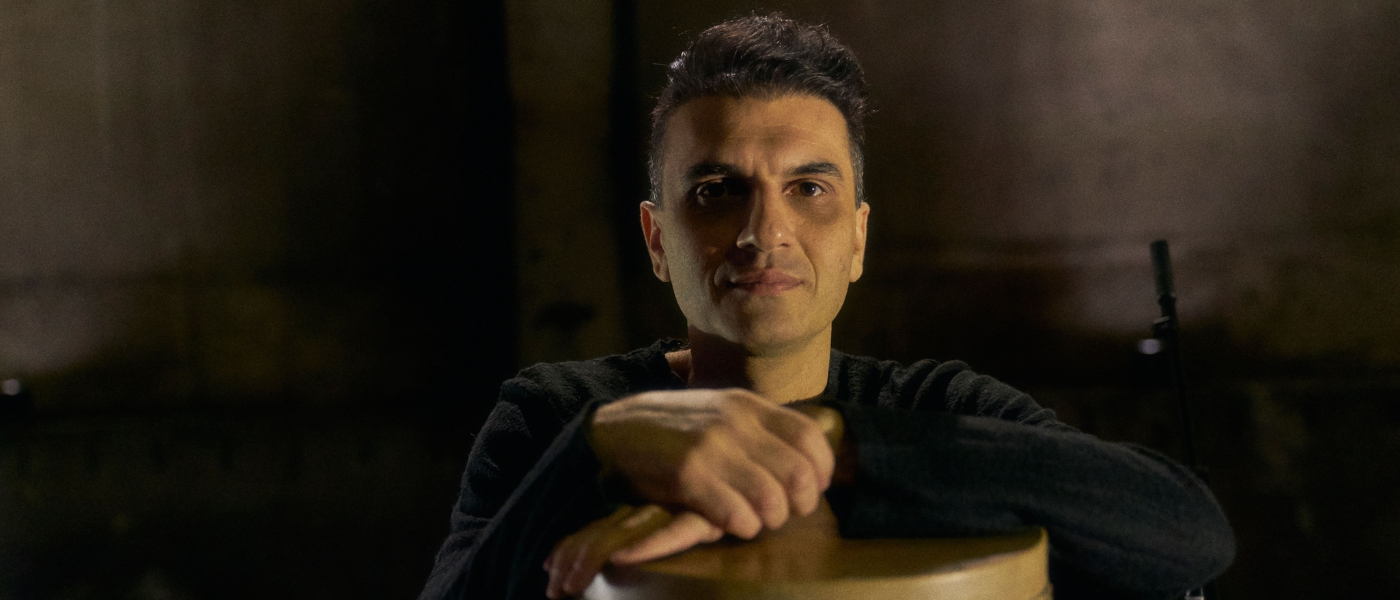 Mohammad Reza Mortazavi (1979) is an Iranian percussionist and composer who has lived in Germany for over twenty years. Fascinated by the sound world of tombak and daf, he developed his own playing style that transcends traditional techniques. With international performances and albums such as FOCUS, Ritme Jaavdanegi and PRISMA, he has built a remarkable international career. He has performed in renowned venues including the Philharmonie Berlin, Pierre Boulez Saal and Philharmonie Köln.
Text: René van Peer
23.00 / Julianna Barwick + Mary Lattimore
Program
Music from the album Tragic Magic
Credits
Julianna Barwick keyboards, vocals
Mary Lattimore harp
Background information
Singers Julianna Barwick and harpist Mary Lattimore, both based in Los Angeles, pick up the thread left years ago by American singersongwriter, harpist and actress Joanna Newsom. On their album Tragic Magic, they find each other in music filled with fairytalelike atmospheres.
Barwick, who is also active as a producer, bathes her voice in generous reverb and multiplies it into wide, billowing choral layers. She often adds melodies and chords from synthesizers and keyboards. Embedded in luxurious clouds of sound, her voice seems to resonate in a hall with a vault stretching up toward the heavens. Weaving around Barwick’s vocals is Lattimore’s pointed harp playing, delicate and shimmering like spidersilk.
In 2025, devastating wildfires ravaged Los Angeles, prompting the two artists to seek refuge in Paris—an experience Barwick sings about in the final track of Tragic Magic. For the album’s music, Barwick selected a number of vintage analog synthesizers from the collection of the Musée de la Musique in Paris. Lattimore chose centuriesold harps. They won’t be able to take those on tour, of course, but they can evoke the album’s enchanting atmosphere in their performance at the Minimal Music Festival.
Biographies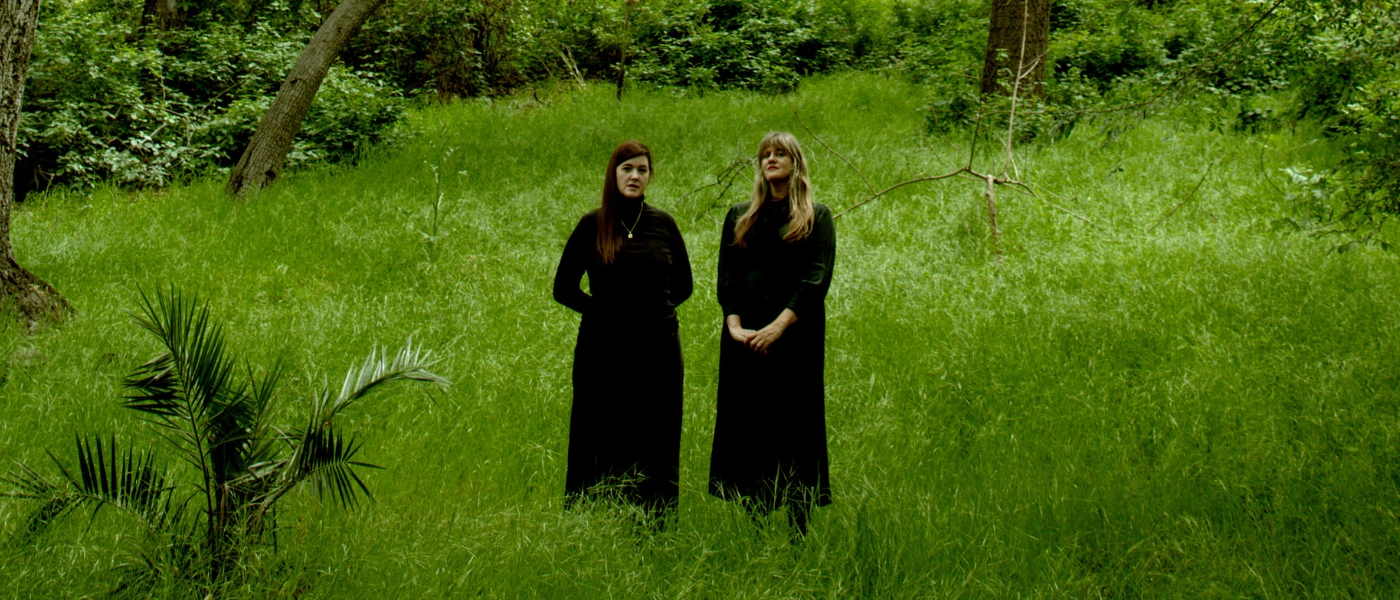
Julianna Barwick is an American composer, vocalist and producer from Louisiana, known for her ethereal ambient music built from layered vocal loops. Strongly influenced by her background in church choir singing, her work creates deep, meditative sonic worlds. Since her debut EP Sanguine (2006), she has gained international acclaim with albums such as The Magic Place, Nepenthe and Healing Is a Miracle, and has collaborated with artists including Icelandic multiinstrumentalist Jónsi and Mary Lattimore.
Mary Lattimore (1980) is an American harpist and composer from Asheville, North Carolina, now based in Los Angeles. She is known for her experimental and ambient approach to the harp, using effects, loops and improvisation to create dreamy, narrative soundscapes. Alongside her solo work, she has collaborated with artists such as Thurston Moore, Kurt Vile, Steve Gunn and Julianna Barwick. Her albums, including At the Dam, Hundreds of Days and Goodbye, Hotel Arkada, have received wide acclaim, and in 2014 she was awarded a Pew Fellowship for her innovative contributions to contemporary music.
Text: René van Peer
Sun 19 April
14.15 / John Luther Adams
Program
John Luther Adams
Nunataks (Solitary Peaks) (piano solo)
Among Red Mountains (piano solo)
Cold Mountain (for Ralph van Raat) (piano solo)
Tukiliit (The Stone People Who Live in the Wind) (for Emanuele Arciuli) (piano solo)
Four Thousand Holes (new version for 2 pianos, World premiere)
Dark Waves (2 pianos)
Credits
Ralph van Raat piano
Emanuele Arciuli piano
Background information
Ralph van Raat performs, together with Emanuele Arciuli, the complete piano works of John Luther Adams, an American composer whose music expresses his profound connection to the natural world. That connection grew out of forty years spent living in Alaska, a place whose environment can be both lifethreatening and of unparalleled beauty. He eventually left because this landscape was increasingly endangered by profitdriven human intervention. Since then, he has lived in deserts.
“Adams has a truly unique voice,” says Ralph van Raat. “In a sense, they are soundscapes. His music somehow seems to move and stand still at the same time. He often uses immense, static blocks of sound that are nevertheless full of inner movement. In doing so, he expresses the human position in relation to the environment.” These blocks of sound evoke a mountain landscape in which humanity disappears into insignificance. “There is something transcendent about his music. On the one hand, these sonic masses depict the sweeping lines and contours of mountains seen from afar. Opposed to this are extremely tranquil passages. Cold Mountain, which he wrote for me, contains incredibly beautiful and fragile moments, as if you were standing in thin air on a mountain peak. Then an overwhelming mass of sound washes over you. He plays with terrifying, unshakeable primal forces.”
That sense of fragility also resonates in Nunataks, named after the Inuit word for mountain peaks that rise above a snowcovered landscape. Four Thousand Holes, whose title is taken from A Day in the Life by The Beatles, belongs to a different world. Van Raat explains: “That piece stems from his pop background. It is unabashedly built on triads. Emanuele and I perform an arrangement for two pianos, with an additional electronic layer. And it ends with a massive final chord, just like the Beatles track.”
Biographies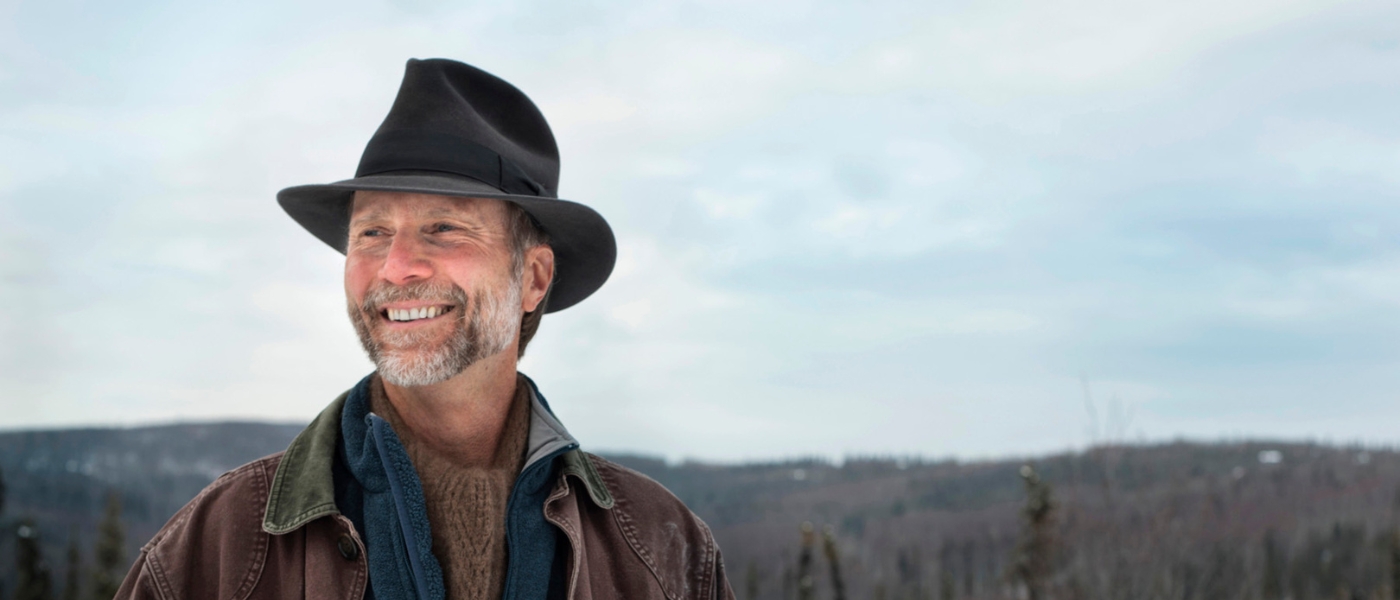 John Luther Adams (1953) grew up in the southern United States and the suburbs of New York. In 1973 he completed his composition studies with James Tenney and Leonard Stein at the California Institute of the Arts. A few years later he settled in Alaska, where he became active in the environmental movement. His early works from that period respond directly to the overwhelming northern landscape. He writes for acoustic instruments as well as electronics and incorporates field recordings into his compositions. Adams has published several books, including Winter Music: Composing the North. Since 2014 he has lived in various desert regions of the American continent.
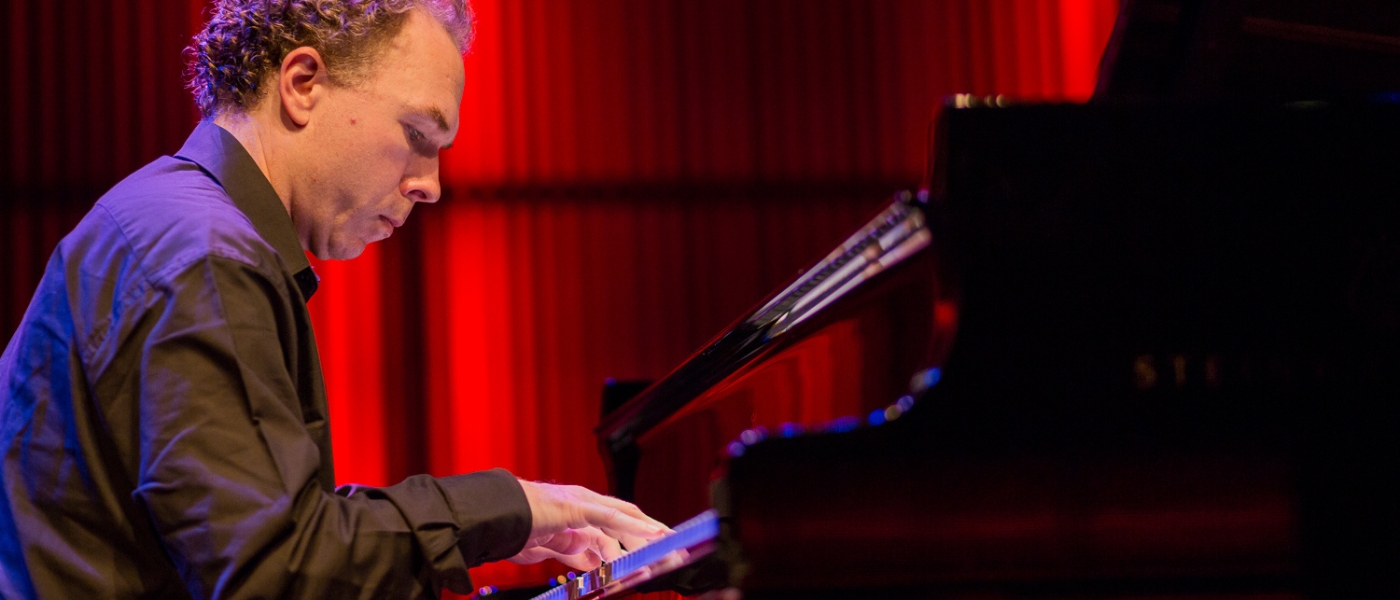 Dutch pianist Ralph van Raat (1978) has been fascinated since the age of fourteen by classical music of the 20th and 21st centuries. With a repertoire ranging from Bach to Boulez, he aims to reveal the beauty of this era’s music through solo recitals, lecturerecitals, concerto performances, CD releases and special projects. He has performed more than fifty piano concertos worldwide, recorded over thirty CDs, and is a frequent guest for radio and television. In his spare moments, he teaches at the Conservatorium van Amsterdam. In 2003, Van Raat was appointed a Steinway Artist.
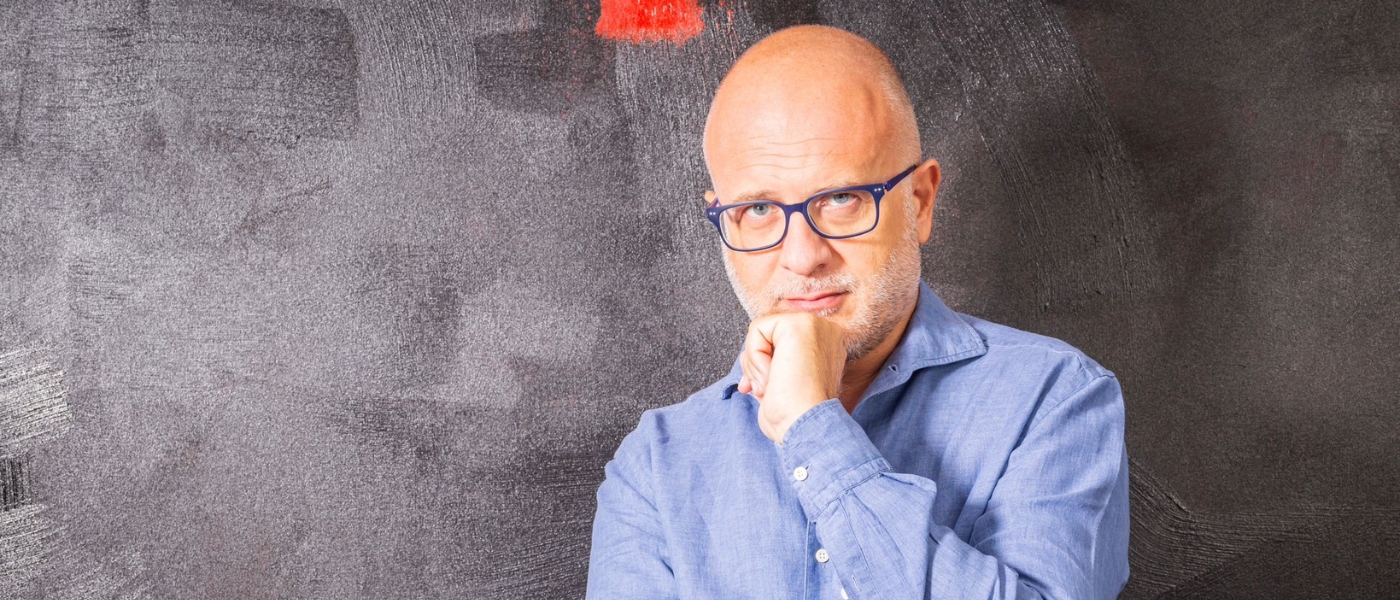 Emanuele Arciuli is one of today’s most original pianists in contemporary classical music. His repertoire spans from Bach to new music, with a strong focus on American composers. He continuously initiates new projects, including the Round Midnight Variations. His extensive discography features world premieres and American music, including a Grammynominated Crumb album. Arciuli teaches contemporary music at the Accademia di Pinerolo, is a professor in Bari and a guest lecturer at several American universities. In 2023 he was appointed Accademico di Santa Cecilia, one of Italy’s highest musical honours.
Tekst: René van Peer
20.30 / The Necks
Program
19.00 / Festivalcafé / Oceanic dj
20.30 / Main hall / The Necks
22.15 / Festivalcafé / Oceanic dj
Background information
The Australian trio The Necks are known for the long, improvised sets performed by pianist Chris Abrahams, drummer Tony Buck and bassist Lloyd Swanton. They have been doing so for nearly forty years. In that time, they have released more than twenty studio albums. There is a notable distinction between their studio work and their live performances: in the studio they make full use of the possibilities there, such as overdubs. Abrahams frequently uses keyboards in recordings, and Buck also plays electric guitar. In concerts, however, they play only their acoustic instruments.
Their music is remarkably diverse. No two albums or concerts resemble one another, though the basic architecture often follows similar lines, with music that unfolds slowly and patiently. Even after all these years, they continue to keep their music fresh. “From the very beginning of the band we found a structure within which we operate musically,” says Tony Buck. “That sounds as if everything is fixed, but in fact we have a great deal of space to welcome all kinds of influences. The process itself doesn’t change fundamentally, but the material can constantly change and evolve. Once things get going, the music itself determines the direction it takes. We don’t have to play a piece we recorded on an album, the way most bands do.”
“It comes down to sitting behind our instruments and waiting until one of us has an idea. Suppose I have an idea and I’m imagining how to take the first step, and one of the others starts playing before I do — in that case I let my idea go. I listen to what the other person has begun and respond to that. Sometimes we can continue like that for an hour, but it can also be finished after just over half an hour. Then we take a short break.”
Biography: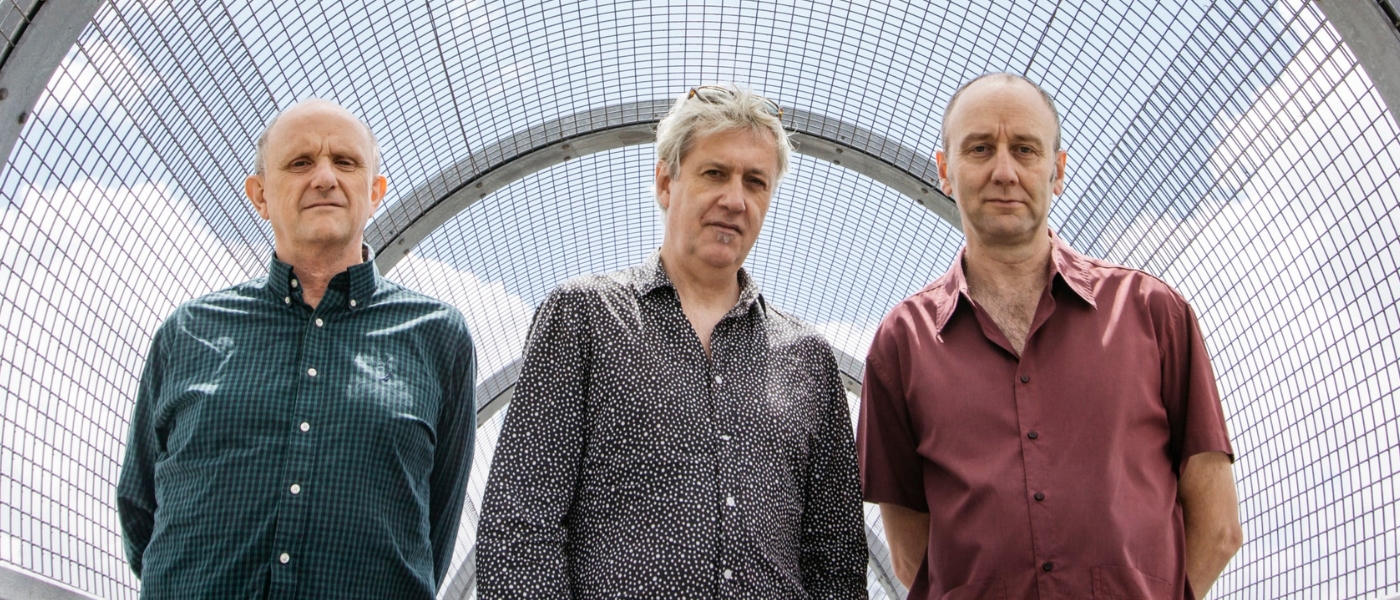 The Necks are an Australian avantgarde jazz trio founded in 1987. The three musicians are known for their long, hypnotic improvisations in which minimalism, free jazz and repetitive structures converge. Their distinctive, slowly evolving sound world has earned them cult status. In 2020, Rolling Stone Australia named them one of the 50 greatest Australian artists of all time.
Text: René van Peer